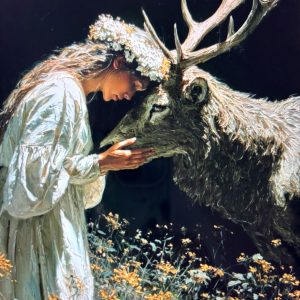
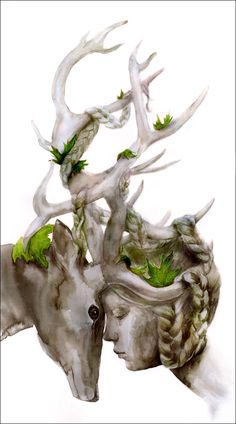
Anima …
In ‘The Fugitive Stag’ Guy was hunted, and wounded.
The wound went deep, but it was a wise wound, a healing trauma …
Transformation.


“He leant upon a tree As though to meditate on wounds and blood” (from ‘Cuchulain Comforted’ by W B Yeats)

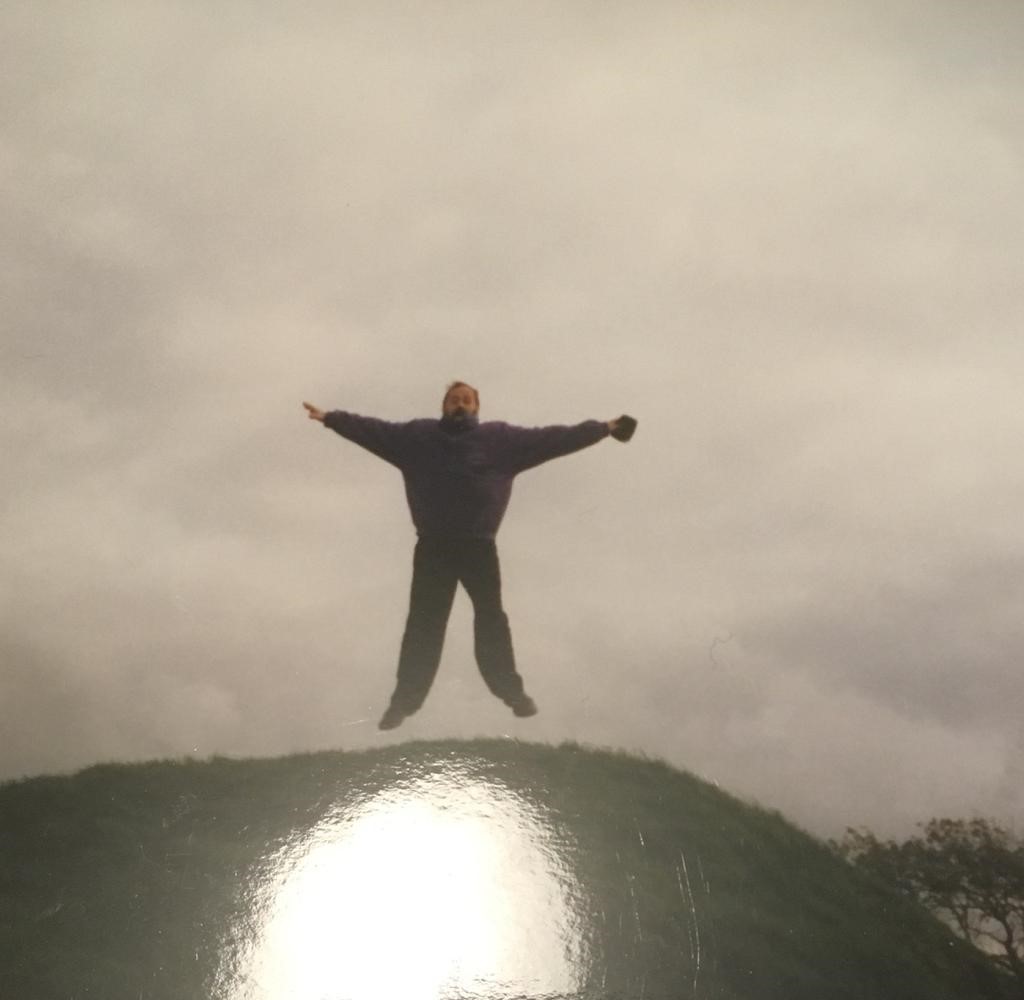
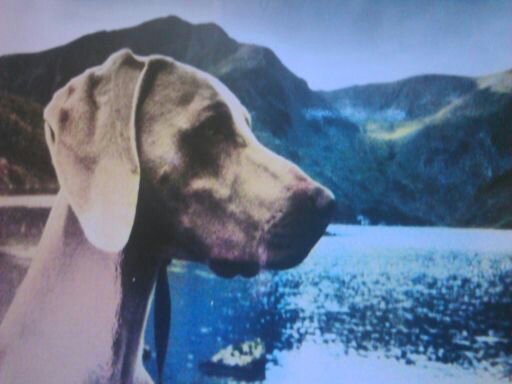

Some day we shall get up before the dawn
And find our ancient hounds before the door,
And wide awake know that the hunt is on …
(from W B Yeats ‘Hound Voice’)
… With them the silver hounds,
sniffing the trace of air! Haie! Haie
(from Ezra Pound ‘The Return’)
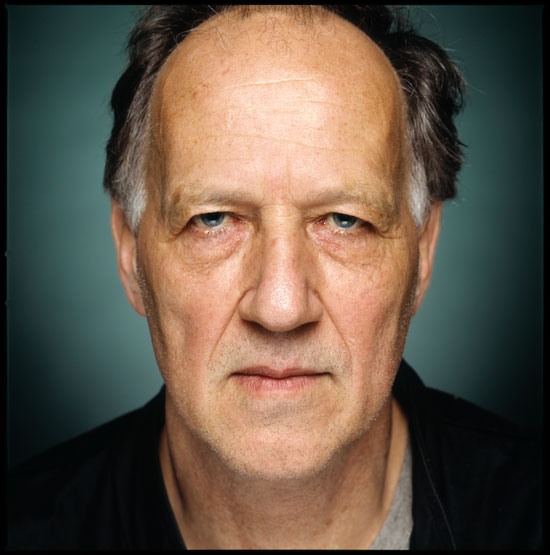
Werner Herzog writes “A lot of what you see in my films isn’t invention; it’s very much life itself, my own life. If you have an image in your head, hold on to it, because. as remote as it might seem, at some point you might be able to use it in a film.
I have always sought to transform my own experiences and fantasies into cinema.”
Yes! True metamorphosis.
Herzog continues: “My films come to me very much alive, like dreams, without explanation. I never think about what it means. I think only about telling a story, and however illogical the images, I let them invade me.”
Almost four years on since I took up Peter’s challenge …
We are hurtling towards TV remake apocalypse. Prepare for the worst | Peter Bradshaw – https://www.theguardian.com/commentisfree/2015/dec/04/tv-remake-apocalypse-prepare-worst-film-icons?CMP=share_btn_tw
“Running dangerously low on mythic icons to sex up or reinvent. God forbid they should create something original.

……. follow The Fugitive Stag to find out what happened!
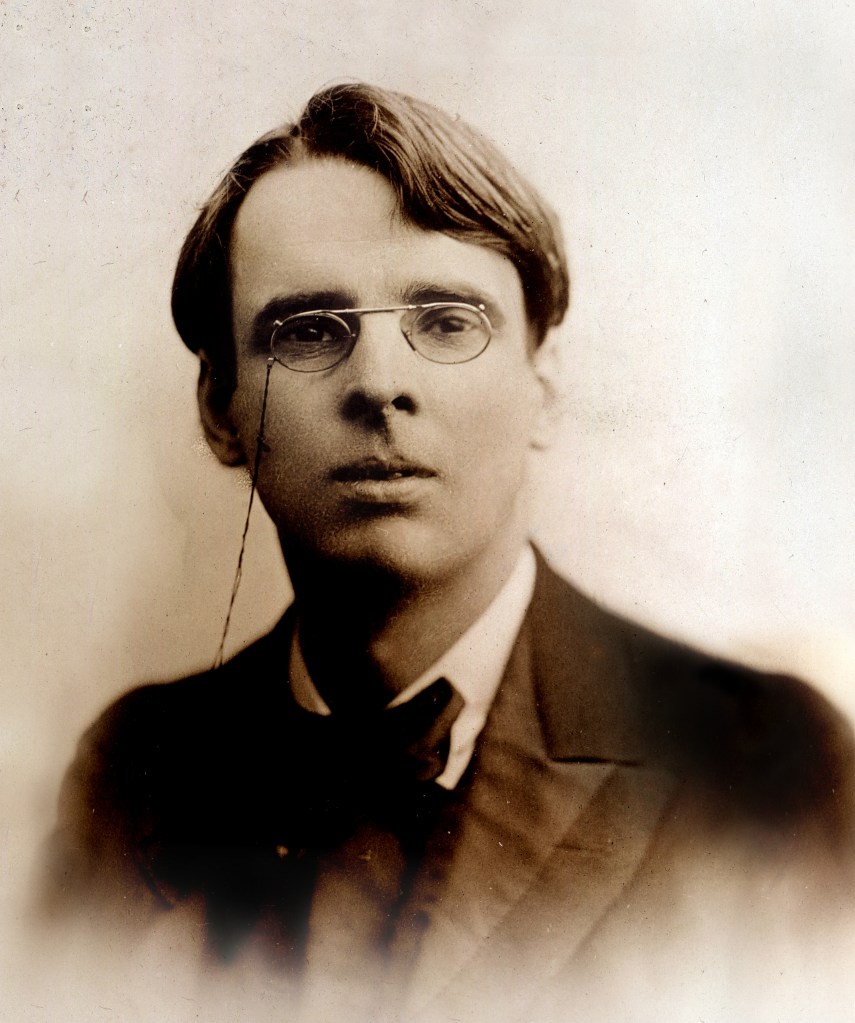
… wrote W B Yeats!” I NEED A FILM! Yeats desire was ” to show events and not merely tell of them … and I seem to myself most alive at the moment when a room full of people share the one lofty emotion. My blunder has been that I did not discover in my youth that my theatre must be the ancient theatre that can be made by unrolling a carpet or marking out a place with a stick, or setting a screen against the wall. (W B Yeats – Note on ‘At the Hawk’s Well’).
Yeats believed that “drama is a picture of the soul of man not his exterior life.” At Samhain 1904 Yeats spoke of a dramatic art which reveals the “energy” of the soul and stated that “we, who are believers, cannot see reality anywhere but in the soul itself. For Yeats the most serious subject for drama was this reality, which he saw as the struggle of the spiritual with the natural order taking place in the depths of the soul.
It is in the soul that those difficult spiritual tests occur that shape a man’s destiny in the external world. Yeats felt that the long decline in the arts was “but the shadow of a declining faith in an unseen reality,”^ and he sought a dramatic art which could deal with the spiritual core of man’s existence on the living stage … Much of his creative energy went into the search for a dramatic art which would allow him to dramatize the nature of spiritual reality in terms of an internal struggle in the soul between the natural and supernatural.
And finally this passage which resonates deeply within me in 2019 … timeless sentiments …“Now the art I long for is also a battle, but it takes place in the depths of the soul and one of the antagonists does not wear a shape known to the world or speak a mortal tongue. It is the struggle of the dream with the world – it is only possible when we transcend circumstances and ourselves, and the greater the contest, the greater the art.” (W B Yeats 1915).


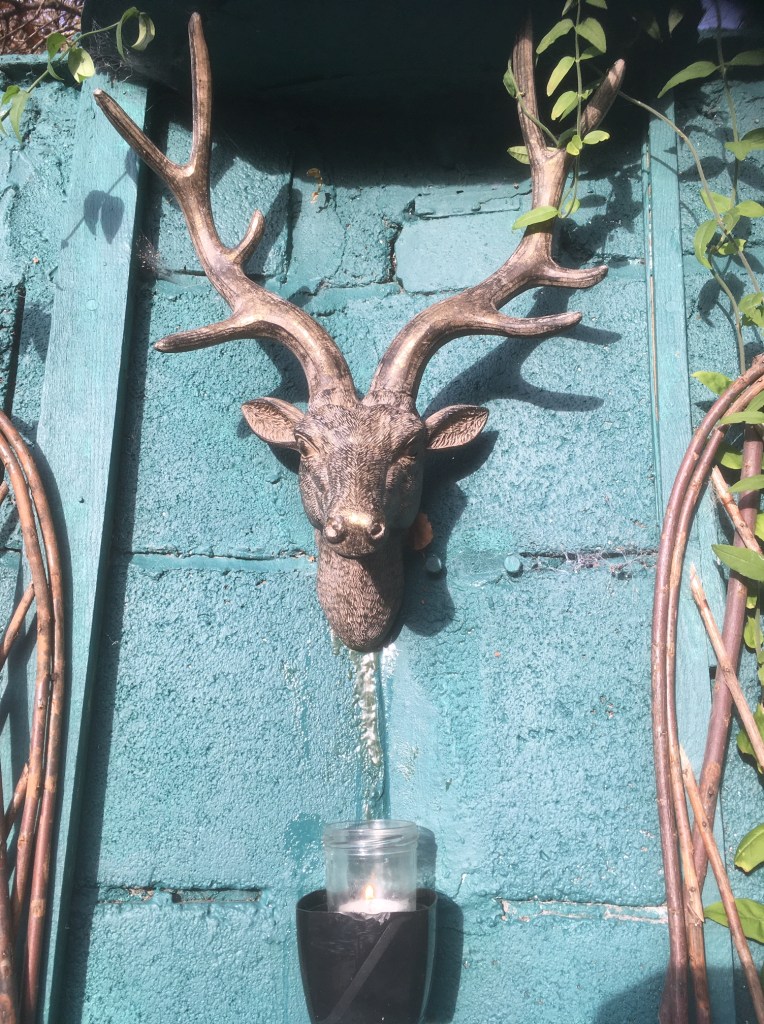
leading to many unexpected places … Un cerf s’invite dans une église / Deer in a church https://youtu.be/KP6ayYZ-17s via @YouTube
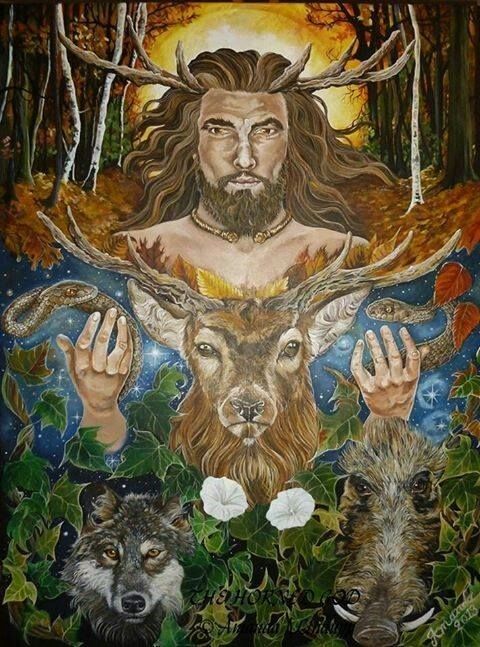
Here’s hoping it leads me soon to an encounter with an exciting film director and/or producer …
Popular misconceptions about Shamanism – and Druidism – is one thing, but reducing my native spirituality to this inane marriage of slapstick and camp comedy and, at times, amateurish acting, is beyond the pale. Blasphemous. I had expected something better-worth (Butterworth*! Spot the subtle play on words!) than this, but it is possibly the worst bit of TV I have been witness to in my lifetime.
I know that these words by Macbeth are out of context, but maybe they best sum it up – ” it is a tale told by an idiot, full of sound and fury, signifying nothing.” .” Let’s hope that it is but a “brief candle” and that there will be no ‘Fool Britannia’ III. Yes! Yes! “Out, out, brief candle.”
Hugo Rifkind best sums it up (The Times 8 November): “When the first series began, almost two years ago, I thus honestly wasn’t sure whether it represented a) a brilliant popular reinvention of British ancient history, or b) exactly what they were taking the piss out of …”
It is truly dreadful. I am a big fan of many of the cast, and I suppose from the point of view of paying their bills, it is a success. Series I may have started with 1 million viewers but 90% had turned off by the final episode.
‘Fool Britannia?’ – Maybe Shakespeare should have the last word: “Die, frantic wretch, for this accursed deed! (Titus Andronicus)
(*Award winner Jez Butterworth is the writer)
 The Fugitive Stag