Seeking the ‘traces of the fugitive goddesses’ – after Holderlin

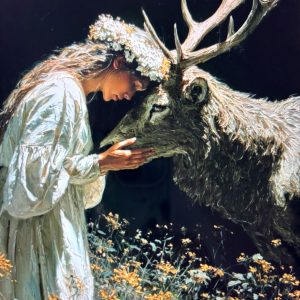
THE FUGITIVE STAG – Long is the destitute ‘Age of the World’s Night’ –   A night that is spreading its darkness.

We live in an age when the traditional gods are no longer able to gather people unto themselves, with the consequence that human history is changed forever. The gods have fled. The One God still reigns – for many! But for others the divine radiance is extinguished in human history. And the tragedy is that mortals do not even realize what they have lost. But this ‘Age of Darkness’ can become a ‘Holy Night’ if some would only realize the predicament of ‘the absence’.

The ‘Turning of the Age’ is the responsibility, neither of a renewed god of old nor of a new one bursting onto the scene. The gods can no longer do everything. The responsibility rests with mortals, and this ‘turning’ entails, at the outset, reaching into the abyss to rediscover the essence of what it means to be human. Once recovered, maybe some of the gods and goddesses will return? And to where would such a deity ‘re-turn-to’?  To the right place at the right time where people are ready to welcome them to their new home.

According to Holderlin, the only mortals who are up for the task are poets – people in the creative arts. It is they who, being able to grasp ‘the absence’, become aware of a new presence. It is they, who having faced the abyss, comes to know the marks or traces of the fugitive gods and goddesses. By following ‘the traces’ our contemporary ‘creatives’ (as I call them) can help kindred souls to also know the way to The Turning.

The closer the poet draws toward midnight, the greater the terror of destitution. Not only could the holy track towards new deities be lost, but also the traces we follow could also be obscured, and even obliterated, by history.

But ‘the creatives’ see hope in the terror of destitution, forever striving to attend to, and celebrate, the traces of the fugitive goddess.

Croeso Eirlys. Welcome back dear snowdrops

Eirlys – Snowdrops

‘I raise this greenery to my lips –’ (Osip Mandelstam)

I raise this greenery to my lips –
these leaves glued into an oath –
with the perjurous earth that bore snowdrops,
mother of the maples and oaks.

Watch me grow strong and blind,
as I follow these humble roots.
What a park! My eyes come alive
now thunder is passing through.

Like beads of mercury, frogs
make a globe of voices, linked together;
branches form from twigs
and a milky figment from cold breath.

30 April 1937

Mandelstam once wrote – I am both a gardener and a flower I am, too;
In the prison of the world, I am not alone.

I love spiders.

A poem by Osip Mandelstam

A speck of insanity?

Your conscience?

Life’s knot, where we’re known and tied

and untied into existence.

So honest spider-beams spinning

cathedrals of super-life crystals

onto ribs, gather them again

to a single bunch.

Grateful bundles of clean lines,

all collected by thin beams,

gathering together, sometime,

like guests with open faces.

But only here on earth, not in the sky,

like in a house filled with music –

just don’t frighten them, don’t wound them – please –

let us live to see that, let us live to see.

Forgive me this as I say it,

read it back to me, quietly, quietly.

(Voronezh, 15 March 1937)

Osip Mandelstam 1891- 1938

Paolo Sorrentino’s Pope is back!

On Sky Atlantic (or HBO and Canal). Absolutely brilliant! On every level.

Glen Weldon writes: “What really got people talking about the show on social media and elsewhere was its deep, abiding, fully committed weirdness.”

Totally agree. Weirdness to perfection.

Anita Singh: “It lurches from hilarious to sinister to surreal.”

And that is its magic. A perfect blend of the three.

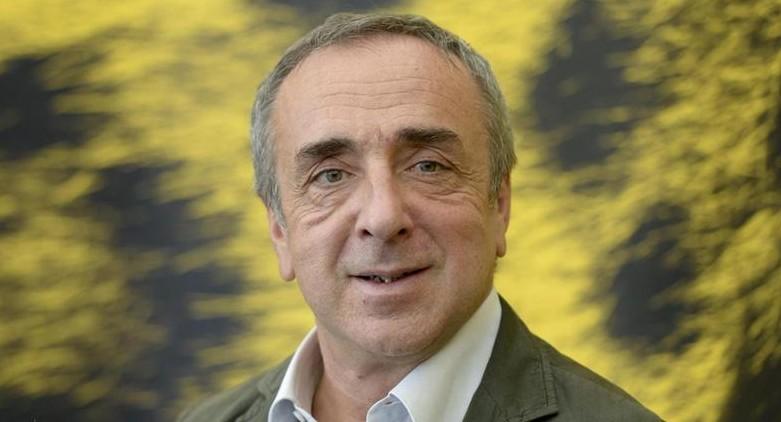
Silvio Orlando is Cardinal Voiello – his performance is brilliant – deserves an award … or two.

The Wheel of Religion

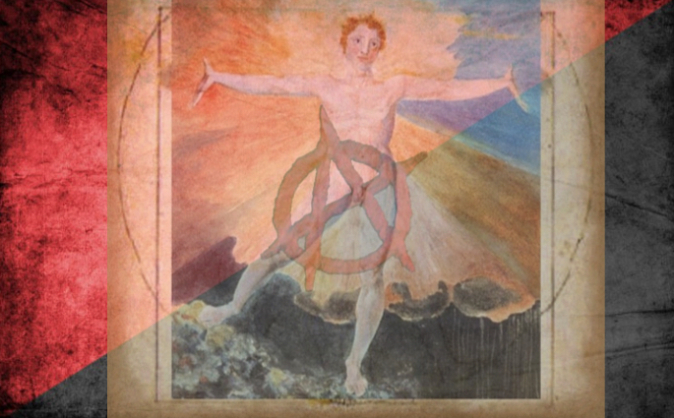
According to William Blake (1804), the Wheel of religion, and the Church, was the Dark Preacher of Death – ” of sin, of sorrow and punishment.”

Jesus died because he “strove against the current of this Wheel,” championing, instead to conquer by forgiveness, the true religion.

The Church was the terrible devouring sword that pretends to love but practices hate, pretends to forgiveness but practices envy, revenge and cruelty.

Albert Schweitzer (1906) also wrote about ‘the wheel’ …

There is silence all around. The Baptist appears, and cries: “Repent, for the Kingdom of Heaven is at hand.” Soon after that comes Jesus, and in the knowledge that He is the coming Son of Man lays hold of the wheel of the world to set it moving on that last revolution which is to bring all ordinary history to a close. It refuses to turn, and He throws Himself upon it. Then it does turn; and crushes Him … the wheel rolls onward, and the mangled body of the one immeasurably great Man, who was strong enough to think of Himself as the spiritual ruler of mankind and to bend history to His purpose, is hanging upon it still. That is His victory and His reign.

Blake’s anarchic Jesus – Albion
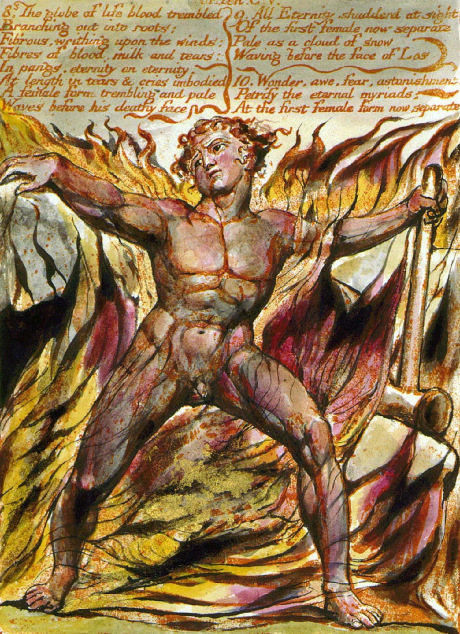
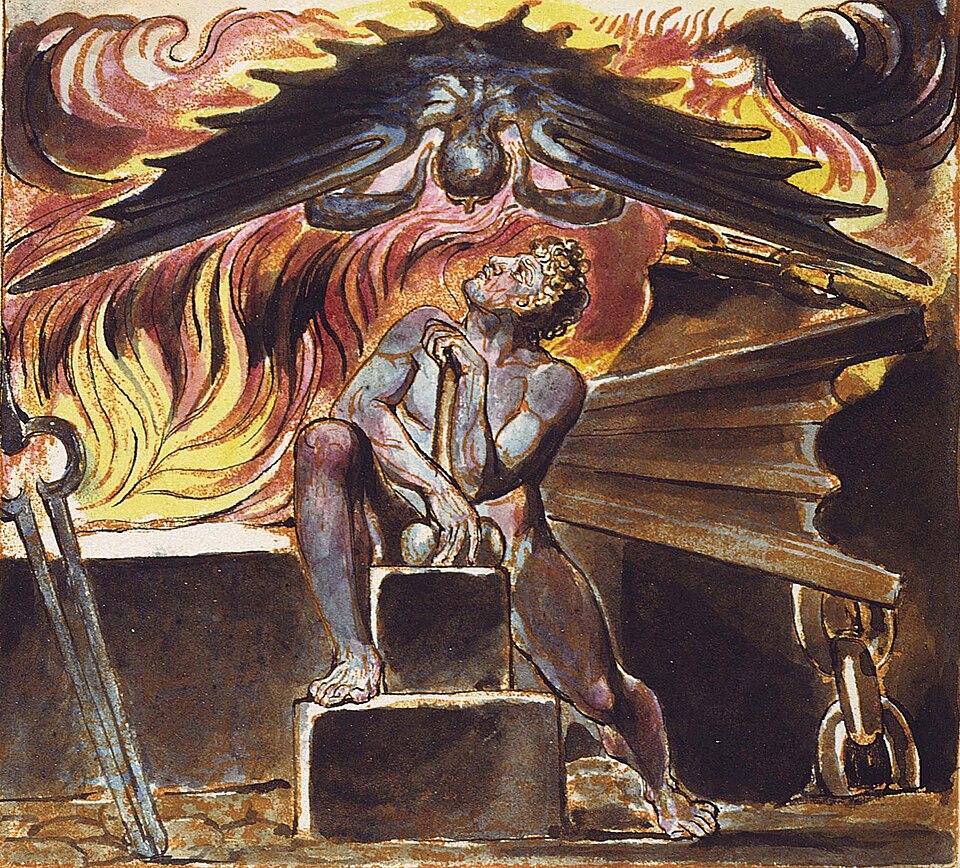
Blake’s Los – the fiery prophet

The Fugitive Stag – an epic adventure rooted in personal facts.

Three ‘discoveries’ in 1980, 1981 and 1985, respectively, helped lay the foundation for the journey of a lifetime, as well as a script for an epic film.

The first occurred while tidying and cleaning-out ‘under the wooden stage’ in my Church Hall at Pennal, a small village in the foothills of the southern Snowdonia mountain range, in Wales. Yes. I was once a Country Parson! It was here that I discovered two 500 years old wooden St Hubert carvings, one depicting a stag and the other a hunting dog.

My introduction to the legend of St Hubert (Eustace) and the Pagan-Christian symbol of a Crucifix rooted between the antlers of a Stag, were very down to earth ones! (A string of ‘stag’ co-incidences were to follow over many years, but that story is for another time).

The second, was the discovery of old stag antlers, again while tidying and ‘cleaning out’, this time an old 1760’s bread oven in the garage of our Parsonage House.

Finally, it was on Samhain or All Hallowed Eve, in 1985 that I came across a second hand copy of Emma Jung’s ‘The Grail Legend’. This was my first encounter with the “cervus fugitivus” or the fugitive stag – an alchemical symbol – that continues to fascinate me to this

But the catalyst for what would become the epic story of ‘The Fugitive Stag’ was the theft of our much loved ‘stag carvings’ from my church in 1988. I was devastated. Wounded in a way that took me years to come to terms with.

The Spanish mystic St John of the Cross and his hymn to the ‘Wounded Stag’, with its theme of ‘intimacy and ‘loss’, best embodies the beginning of that quest:

Where did you hide yourself,
Beloved, and leave me crying?
Like a stag you fled
Once having struck me;
I ran after, calling but You were gone …

From ‘Die Minnesinger’

Beauty – what have we done to her?

The poet Rimbaud wrote in his ‘Season in Hell’

“Once, if my memory serves me well, my life was a banquet where every heart revealed itself, where every wine flowed.

One evening I took Beauty in my arms – and I thought her bitter – and I insulted her.

I steeled myself against justice.

I fled. O witches, O misery, O hate, my treasure was left in your care!”

Rimbaud understood, at the start of his brief career, what others only understood at the end, if at all, that the sacred word no longer has validity. It carries ‘no weight’, as we say. He realized that the poison of culture (our so-called ‘civilized world’ and its values), had transformed beauty and truth into artifice and deception.

He takes Beauty on his knees and he finds her bitter. He abandons her. It was the only easy way that he could still honour her.

The ‘Fugitive Stag’ endeavours to honour Beauty in its own unique way.

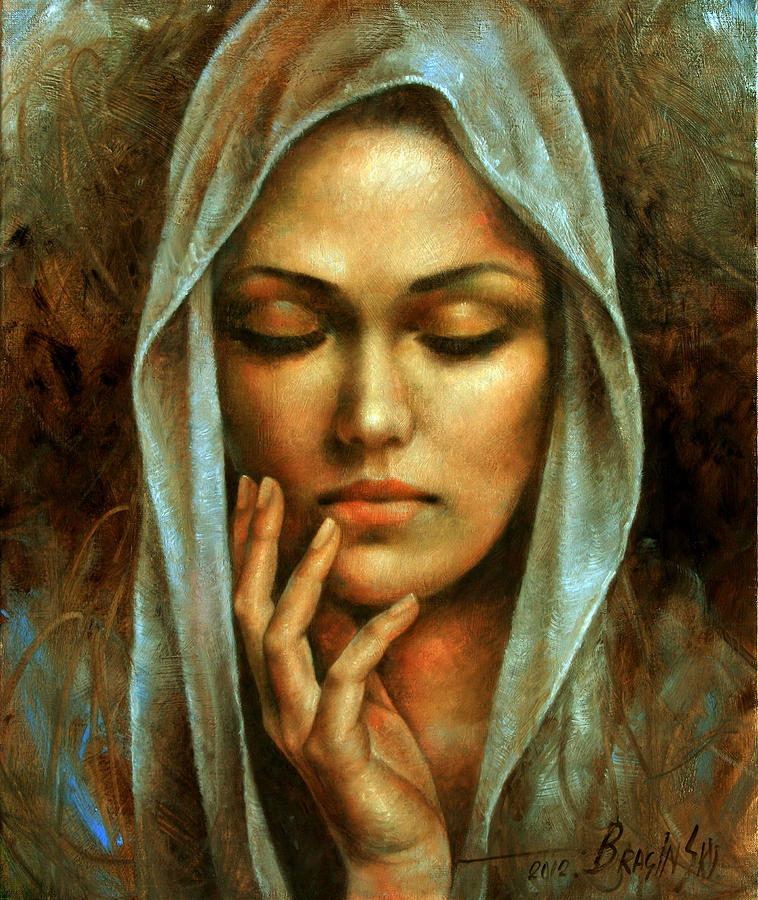
Arthur Braginsky ‘Silentio’

“The Barbarians are still around us …” 221 years on!

The poet Holderlin wrote in 1799

You will find that now the more human organizations, spirits, which appeared to have most definitively formed nature to humanity, are now everywhere unhappier, precisely because they exist more rarely than in other times and places. The barbarians around us tear apart our best powers, before they can be cultivated and only the firm, deep insight into this fate can save us, and prevent us at least from perishing in an unworthy manner. We have to seek what is excellent, and hold to it as well as we can, to strengthen and heal ourselves in the feeling of it and thereby to gain the strength to recognize what is raw, skewed and misshapen not only in pain but as that which it is, in its character and specific lack. (Holderlin in a letter to his half-brother Karl Gok 4 June 1799.)

Hölderlin’s poems, however, display those little shards of light which remind us of who we are and what we might become.

More should listen to him in 2020.

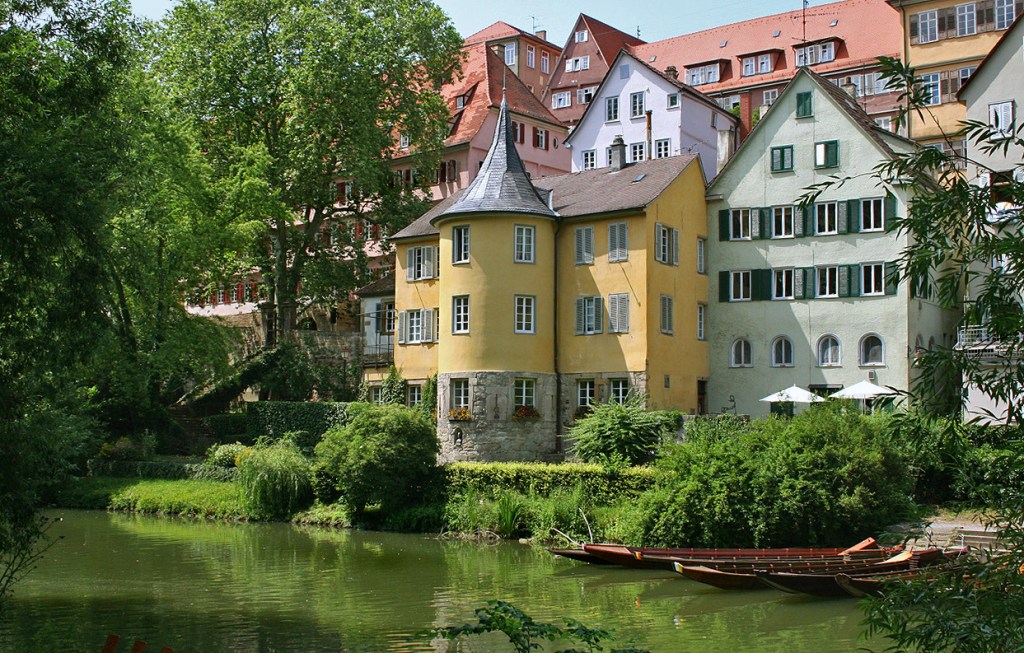
Holderlin Tower in Tubingen – Ann ap lived for a couple of years a few houses down to the right out of picture (in an apartment)

STAND FIRM DEAR FRIENDS – STAND FIRM.