Forty years ago, in August 1983 (4th, in fact) Burkinabe Marxist revolutionary, Thomas Sankara, a former fighter pilot (known to many as ‘Africa’s Che Guevara’), became President of Burkina Faso – it means ‘Land of Dignity’.
He was serving as Prime Minister in 1983, when disputes with the sitting government led to his imprisonment. A group of revolutionaries seized power on his behalf in a popularly-supported military coup. Aged 33, Sankara became the President of the Republic of Upper Volta (as it was then called) and launched social, ecological and economic programmes.
During his short four years in power, the African ‘Land of Dignity’:
1 Vaccinated 2.5 million children against meningitis, yellow fever and measles in a matter of weeks.
2 He initiated a nation-wide literacy campaign, increasing the literacy rate from 13% in 1983 to 73% in 1987.
3 He planted over 10 million trees to prevent desertification.
4 He built roads and a railway to tie the nation together, without foreign aid.
5 He appointed women to high governmental positions, encouraged them to work, recruited them into the military, and granted pregnancy leave during education.
6 He outlawed female genital mutilation, forced marriages and polygamy in support of Women’s rights.
7 He redistributed land from the feudal landlords and gace it directly to the peasants.
8 Wheat production rose in three years from 1700 kg per hectare to 3800 kg per hectare, making the country food self-sufficient.
On 15 October 1987, unhappy with his socialist programme, Sankara was overthrown and assassinated in a military coup backed by France and CIA . He was 37 years old. The killing was engineered by a close confidant of Thomas, one Blaise Campaore. He became the new leader, backed by – well, you can guess who! His dictatorship remained in power for 27 years until overthrown by popular protests in 2014.
A few months prior to his death, Sankara had also called on African countries to not pay back debt to European countries and international institutions such as the IMF and World Bank.
Most people opposed the new French/CIA backed regime. Many wreaths were sent to Sankara’s grave with the words ‘Thomas Sankara cannot be murdered by traitors’, and ‘the people will never forget you’. The regime even blocked a ‘funeral’ to be held for Sankara, in case it turned into a display of mass opposition to the coup. His body was actually dismembered and buried in an unmarked grave. By contrast, a demonstration of support for the new regime was cancelled because hardly anyone turned up.
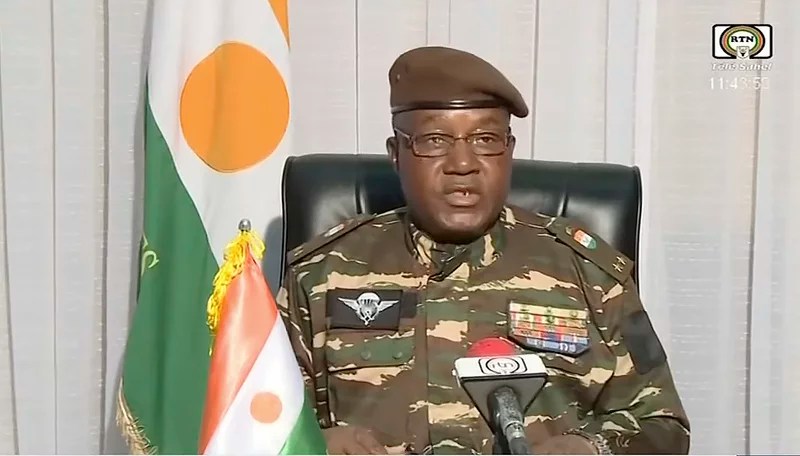
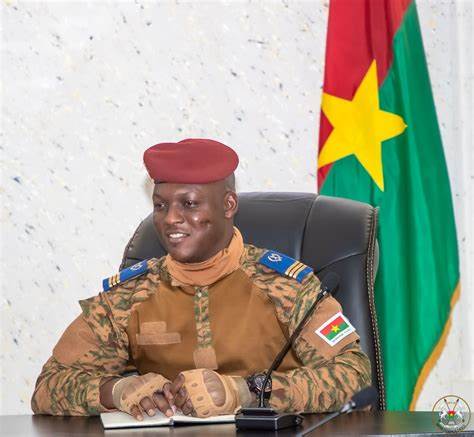
Today, Burkina Faso is led by 34 year old interim leader Ibrahim Traore, having ousted the unpopular interim president Damiba in a military coup in September 2022.
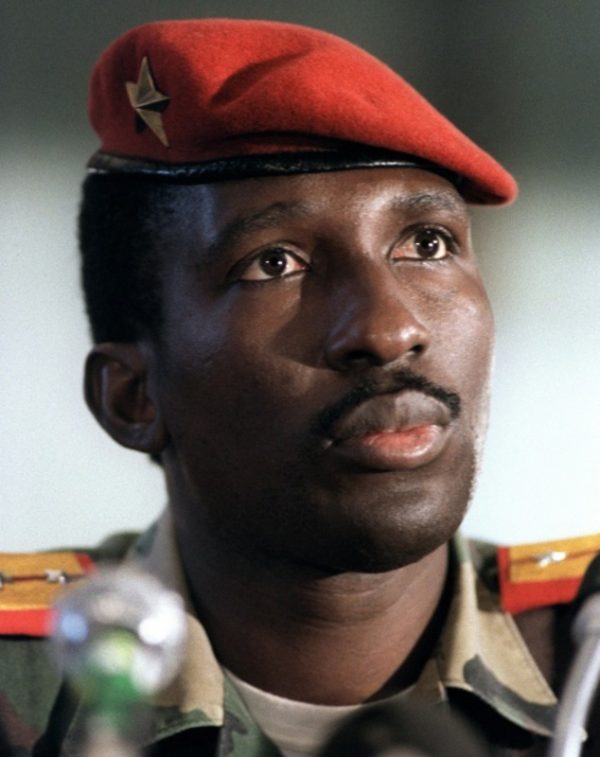
The red beret? You guessed – in honour, and in celebration of, Thomas Sankar.
Thomas Sankara’s biographer, Ernest Harsch, paints a vivid image of the remarkable personality of this legendary African icon:
He did not like the general pomp that came with the office. He was interested in ideas. He’d think for a while, then respond to your questions. In terms of public events, he really knew how to talk to people. He was a great orator. He loved to joke. He often played with the French language and coined new terms. He often made puns. So, he had a sense of humour. In Burkina Faso, you’d see him riding around the capital on a bicycle or walking around on foot without an entourage.
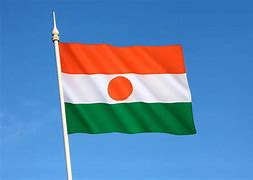
Fast forward to 2023 and events in Niger: Sankara, the anti-imperialist, took power on a promise to thwart corruption and post-colonial influences, denouncing foreign aid as a control mechanism. Today, many share his ideals in west Africa.
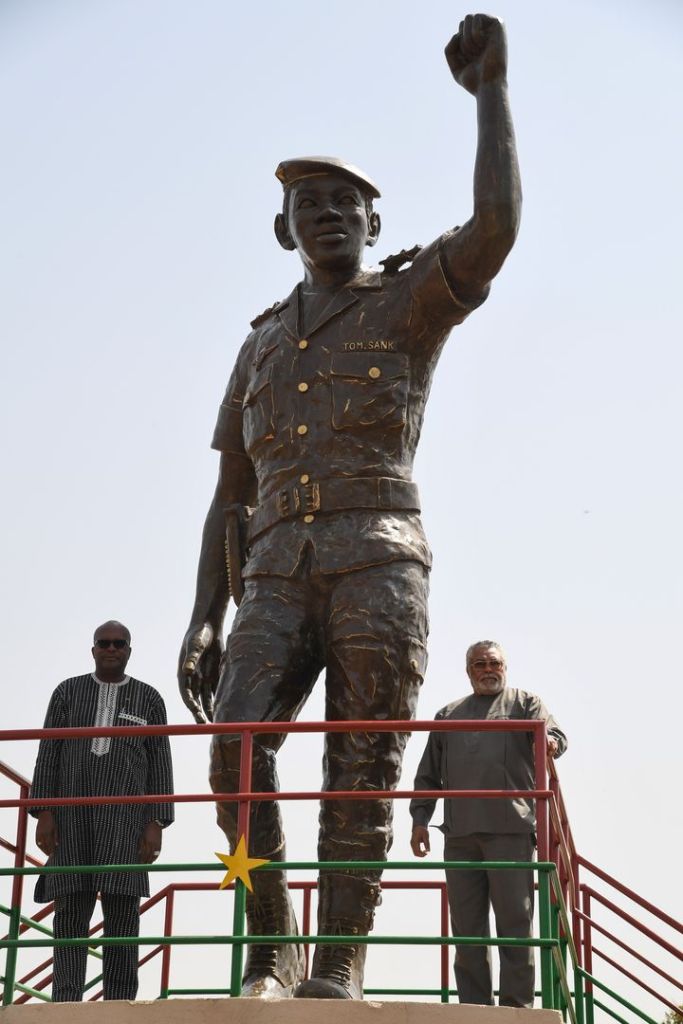
Five meters high, on 2 March 2029, a statue was unveiled in Ouagadougou in memory of Thomas Sankar. “We have emotions at this site but we have to capitalize on those emotions to move forward. Those who fell here remind us that we are fighting for freedom and justice,” said Ghanaian John Rawlings, described as a “great friend” of Sankara. It is a deserved tribute for the one who was the father of the democratic and popular revolution in modern day Africa.


 The Fugitive Stag