The Wasteland (T S Eliot) – A Biography of a Poem by Matthew Hollis

Just finished .. not just ‘reading’ it but experiencing it, journeying into it … an epic encounter with a truly epic poem. Diolch Matthew. I’ve always been fascinated by the friendship between TSE and Ezra Pound and the latter’s role in the poem.

Matthew was born in Norwich 1971 – he was Poetry Editor at Faber & Faber from 2012 to 2023. His second collection, called ‘Earth House, was published by Bloodaxe Books in 2023 and was longlisted for The Laurel Prize 2023.

The ‘designer’ cover of my 2003 copy of TWL (& Other Poems)

I like this cover – very original. I think Ezra Pound would approve! Vanessa Willoughby: The poem’s final form was heavily influenced by Ezra Pound, who made extensive cuts and revisions to Eliot’s manuscript. Eliot once said of his mentor and friend, who he first met in 1914 in Europe, “Mr. Pound is more responsible for the 20th‐century revolution in poetry than is any other individual.”

T S Eliot: © Estate of T. S. Eliot and reprinted by permission of Faber & Faber Ltd. Ezra Pound: By Ezra Pound, from New Directions Pub. acting as agent, copyright © 2015 by Mary de Rachewiltz and the Estate of Omar S. Pound. Reprinted by permission of New Directions Publishing Corp. Berg Collection: © The Henry W. and Albert A. Berg Collection of English and American Literature The New York Public Library Astor, Lenox and Tilden Foundations.

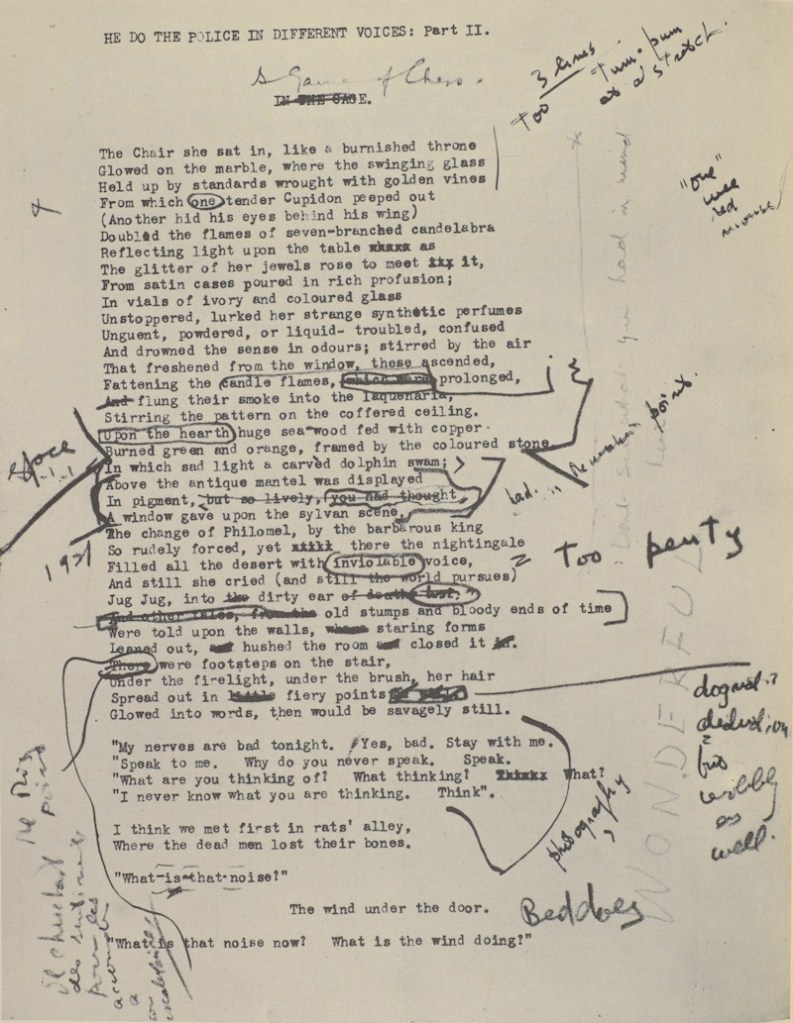
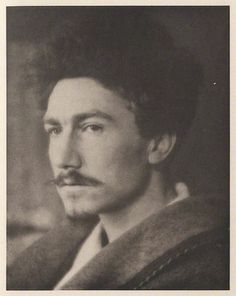
Ezra Pound 1963

If Eliot is the poem’s mother, then perhaps Pound was right to claim the role of obstetrician:
“If you must needs enquire
Know diligent Reader
That on each Occasion
Ezra performed the Caesarean Operation.”

Quote from Ezra Pound’s “Sage Homme,” a poem included in his 24 December 1921, letter to T.S. Eliot celebrating The Waste Land.

Tyler Malone writes: The evidence of Pound’s contributions hasn’t much altered the mythos surrounding the text one way or the other. Some still diminish Pound’s contributions, and others oversell them. Decades after the publication, an English professor in a graduate seminar I took referred to The Waste Land as “the best poem Ezra Pound ever wrote.” 

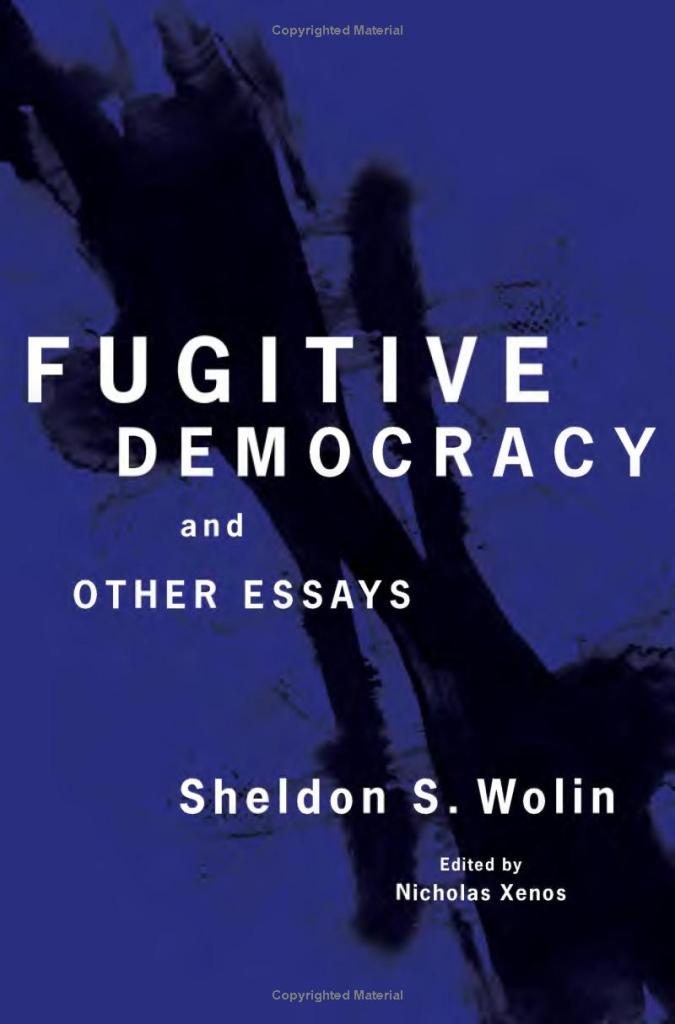
Capitalism & Democracy – can they coexist?

Democracy is at odds with corporate hierarchies – a truly devastating insight.

Power in Democracy is dispersed – corporate power is concentrated!

Yes, sadly, today, we have to accept the limits of popular democracy.

Chris Hedges and Sheldon Wolin: Can Capitalism and Democracy Coexist? Fu… https://youtu.be/LGc8DMHMyi8?si=aub1xuS0vIPYeII3 via @YouTube

Sheldon Wolin 1922 – 2015

“Democracy in the late modern world cannot be a complete political system,” he wrote in a 1994 essay, “and given the awesome potentialities of modern forms of power, and what they exact of the social and natural world, it ought not to be hoped or striven for.”

“The left cannot play politics on terms set by mass media and mass organization,” he told The New York Times in 1982. “A more decentralized and local politics, scattered and diffuse, is the first best hope.”

He eventually took the view that corporate power and political power were becoming so intertwined in the USA, and the public so apathetic, that genuine participatory democracy was at best a remote possibility, expressed in rare “fugitive” expressions of the popular will.

In a word, the USA – and the West, in general – has invented a new political form, “inverted totalitarianism,“ in which economic rather than political power is dangerously dominant.


It looks as though Sheldon was right all along: true democracy is only seen and expressed in rare and spontaneous moments of popular participation and resistance to power – witness parts of West Africa today. What’s more, our democracy is by now totally dominated by the corporate agenda and, what I call the dark arts of ‘media entertainment’.

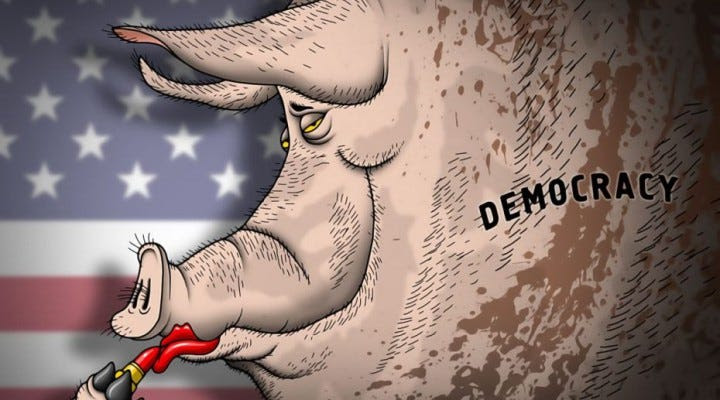
Remember, it only takes an ‘n’ to turn ‘demo-cracy’ into a demoN! That’s ‘cracy’!!!!!

Given Wolin’s depiction of potential “inverted totalitarianism” in the here and now, what does he suggest “the people” – referred to as “the demos” from the Greek – do? Mmmm!

What can ‘they’ do? What can ‘we’ do? Remember, the ‘demos’ only needs that ‘n’ to become demons … demonic! Maybe that is a risk that has to be taken. Maybe? Really?

I Keep the Mysteries True

The Mysteries Remain

The mysteries remain,
I keep the same
cycle of seed-time
and of sun and rain;
Demeter in the grass,
I multiply,
renew and bless
Bacchus in the vine;
I hold the law,
I keep the mysteries true,
the first of these
to name the living, dead;
I am the wine and bread.
I keep the law,
I hold the mysteries true,
I am the vine,
the branches, you
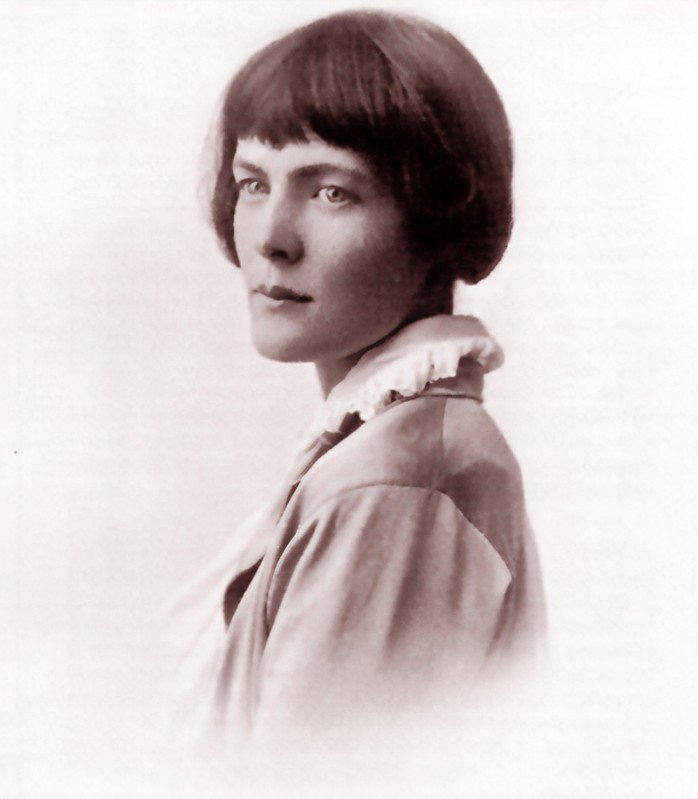
and you. (H.D. aka Hilda Doolittle)

H.D. 1886 Bethlehem PA -1961 Zurich

Idris Davies (2)

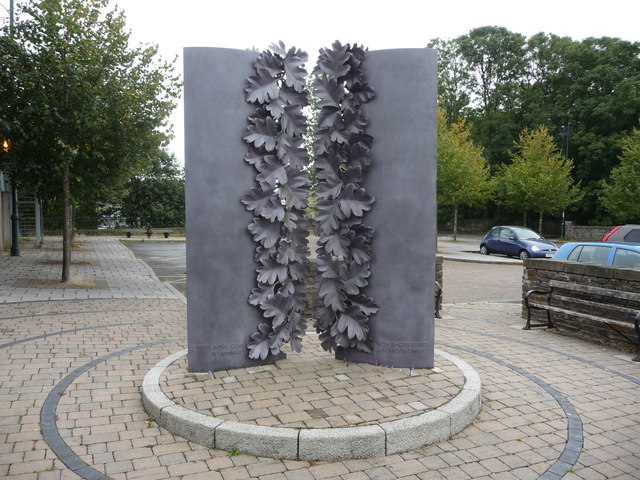
Idris Davies memorial in Rhymney

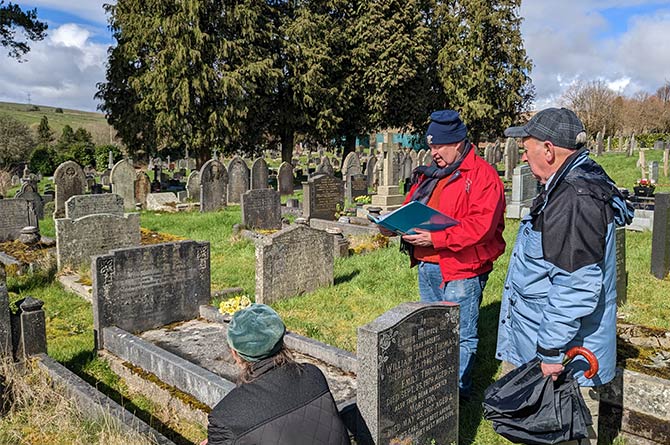
Idris Davies Grave

When April came to Rhymney,
with shower and sun and shower.
The green hills and the brown hills,
could sport some silver flower.
And sweet it was to fancy,
that even the blackest mound
was proud of its single daisy,
rooted in bitter ground.

And old men would remember,
and young men would be vain.
And the hawthorn by the pithead,
would blossom in the rain.
And the blackest streets of evening,
they had their magic hour,
when April came to Rhymney,
with shower and sun and shower.

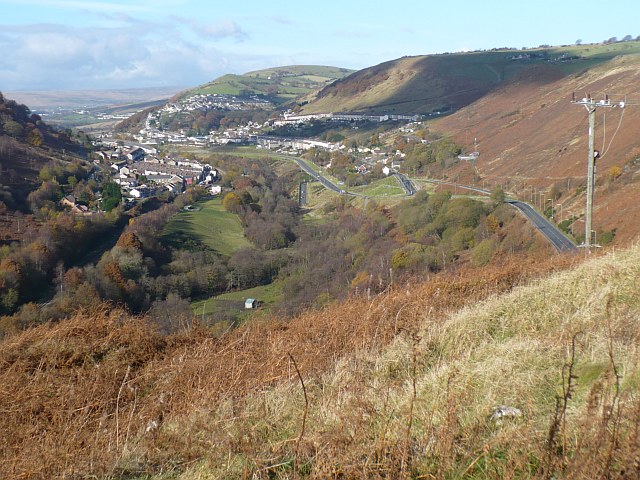
Rhymney Valley by Robert Drayton

Resurrection

RESURRECTION

And I rise, and I remember

The lads I used to know,

And I must go to greet them

Ere in the cloud I go.

Though one of them betrayed me,

And one denied my name,

And the other ten forsook me,

Yet will I smother blame.

O I will seek and find them

And talk of what would be

When we were friends together

On the hills of Galilee.

Though one of them is strangled,

The other eleven live,

And I will smile upon them

To show that I forgive.

And I will stand before them

Till every doubt is dead,

And speak of peaceful pleasures

Ere thorns were round my head.

And I will talk of troubles

And joys that used to be

When we were friends together

On the hills of Galilee.                          

IDRIS DAVIES (1905 – 1953)

Born and died in Rhymney nr. Merthyr Tydfil in South Wales.

Idris Davies (6 January 1905 – 6 April 1953) was a Welsh poet. He wrote originally in Welsh but later writing exclusively in English. He was the only poet to cover significant events of the early 20th century in the South Wales coal mining valleys.

In a diary entry Davies wrote: “I am a socialist. That is why I want as much beauty as possible in our everyday lives, and so I am an enemy of pseudo-poetry and pseudo-art of all kinds. Too many ‘poets of the Left’, as they call themselves, are badly in need of instruction as to the difference between poetry and propaganda … These people should read William Blake on Imagination until they show signs of understanding him. Then the air will be clear again, and the land be, if not full of, fit for song.”

Gwalia Deserta XXXVI

In the places of my boyhood
The pit-wheels turn no more,
Nor any furnace lightens
The midnight as of yore.


The slopes of slag and cinder
Are sulking on the rain,
And in derelict valleys
The hope of youth is slain.


And yet I love to wander
The early ways I went,
And watch from doors and bridges
The hills and skies of Gwent.


Though blighted be the valleys
Where man meets man with pain,
The things by boyhood cherished
Stand firm, and shall remain.

from Gwalia Deserta (1938)

Child of the Grass – Ezra Pound

Child of the grass

The years pass Above us

Shadows of air All these shall Love us

Winds for our fellows

The browns and the yellows

            Of autumn our colours

Now at our life’s morn. Be we well sworn

Ne’er to grow older

Our spirits be bolder At meeting

Than e’er before All the old lore

Of the forests & woodways

Shall aid us: Keep we the bond & seal

Ne’er shall we feel

            Aught of sorrow

Let light flow about thee

            As a cloak of air

EZRA POUND (1885 – 1972)

ABSOLUTE REVERENCE – D H Lawrence

I feel absolute reverence to nobody and to nothing human

neither to persons nor things nor ideas, ideals nor religions nor institutions,

to these things I feel only respect, and a tinge of reverence

when I see the fluttering of pure life in them.

But to something unseen, unknown, creative

from which I feel I am a derivative

I feel absolute reverence, Say no more!

David Herbert Lawrence 1885 – 1930