“I need a theatre” …

… wrote W B Yeats!” I NEED A FILM! Yeats desire was ” to show events and not merely tell of them … and I seem to myself most alive at the moment when a room full of people share the one lofty emotion. My blunder has been that I did not discover in my youth that my theatre must be the ancient theatre that can be made by unrolling a carpet or marking out a place with a stick, or setting a screen against the wall. (W B Yeats – Note on ‘At the Hawk’s Well’).

Yeats believed that “drama is a picture of the soul of man not his exterior life.” At Samhain 1904 Yeats spoke of a dramatic art which reveals the “energy” of the soul and stated that “we, who are believers, cannot see reality anywhere but in the soul itself. For Yeats the most serious subject for drama was this reality, which he saw as the struggle of the spiritual with the natural order taking place in the depths of the soul.

It is in the soul that those difficult spiritual tests occur that shape a man’s destiny in the external world. Yeats felt that the long decline in the arts was “but the shadow of a declining faith in an unseen reality,”^ and he sought a dramatic art which could deal with the spiritual core of man’s existence on the living stage … Much of his creative energy went into the search for a dramatic art which would allow him to dramatize the nature of spiritual reality in terms of an internal struggle in the soul between the natural and supernatural.

And finally this passage which resonates deeply within me in 2019 … timeless sentiments …“Now the art I long for is also a battle, but it takes place in the depths of the soul and one of the antagonists does not wear a shape known to the world or speak a mortal tongue. It is the struggle of the dream with the world – it is only possible when we transcend circumstances and ourselves, and the greater the contest, the greater the art.” (W B Yeats 1915).
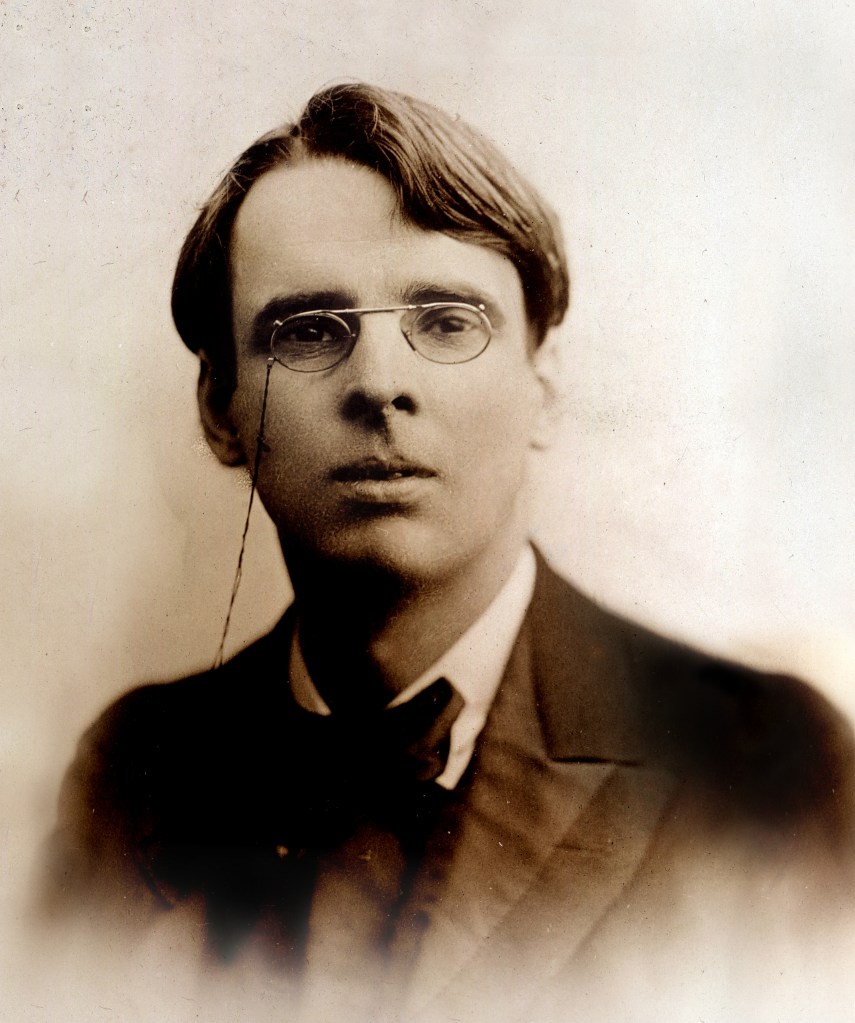
William Butler Yeats (1865-1939)

Sky Atlantic’s Britannia II …

Popular misconceptions about Shamanism – and Druidism – is one thing, but reducing my native spirituality to this inane marriage of slapstick and camp comedy and, at times, amateurish acting, is beyond the pale. Blasphemous. I had expected something better-worth (Butterworth*! Spot the subtle play on words!) than this, but it is possibly the worst bit of TV I have been witness to in my lifetime.

I know that these words by Macbeth are out of context, but maybe they best sum it up – ” it is a tale told by an idiot, full of sound and fury, signifying nothing.” .” Let’s hope that it is but a “brief candle” and that there will be no ‘Fool Britannia’ III. Yes! Yes! “Out, out, brief candle.”

Hugo Rifkind best sums it up (The Times 8 November): “When the first series began, almost two years ago, I thus honestly wasn’t sure whether it represented a) a brilliant popular reinvention of British ancient history, or b) exactly what they were taking the piss out of …”

It is truly dreadful. I am a big fan of many of the cast, and I suppose from the point of view of paying their bills, it is a success. Series I may have started with 1 million viewers but 90% had turned off by the final episode.

‘Fool Britannia?’ – Maybe Shakespeare should have the last word: “Die, frantic wretch, for this accursed deed! (Titus Andronicus)

(*Award winner Jez Butterworth is the writer)

Set in a parallel world ‘almost’ exactly like ours …

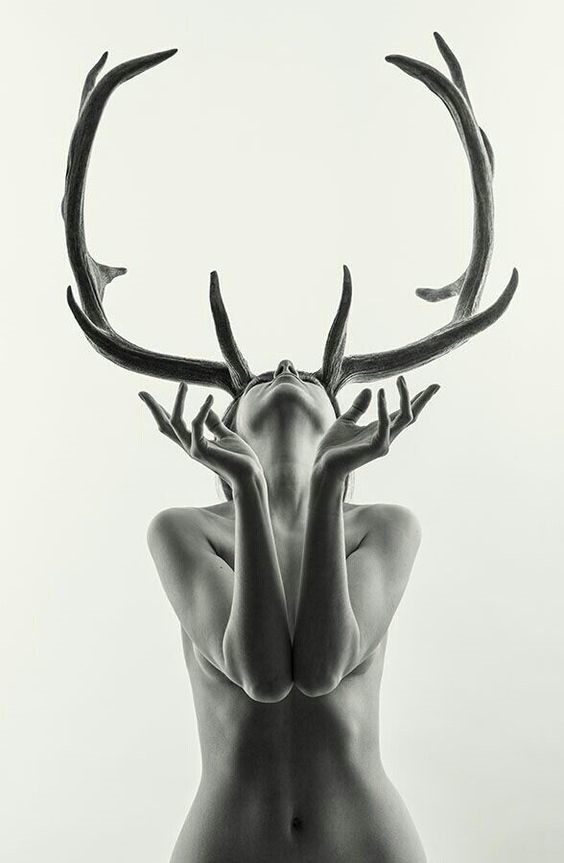
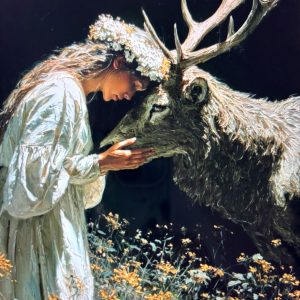
Tthe Fugitive Stag tells the story of what happens when history and myth become embodied in a single form, that is both goddess and woman … something new … something altogether new …

A world where the Shamanic and Mystical heritage of the Celtic Fringe meets the Exotic World of Global High Fashion and Beauty and a Religious Orthodoxy ‘Hell-Bent’ on winning its Holy War against Goddess …

Richard Strauss’s An Alpine Symphony (1915) …

What a theme tune! And oh so ‘modern.’ Pick it up at 22:50 to 26:00 and enjoy the musical thread of The Fugitive Stag.

Richard Strauss: Eine Alpensinfonie Op.64 (An Alpine Symphonie) (Karajan) https://youtu.be/ji6_6soqtNk via @YouTube

The great Russian born conductor Semyon Bychkov writes – The core of The Alpine Symphony is human life and what one goes through in it, with the joys and the sorrows and struggle and achievement. So, it is deeply existential. Doesn’t it happen in life all the time? How many detours every one of us makes in life? Think beyond that actual physical experience of going through the bushes (eg), think of it as a metaphor.

We spend our lifetime trying to figure out why we’re here.  Bychkov believes the Alpine Symphony offers some answers. “I can’t live without it. It tells me about our world, our reason to live. It is a guide to life for sure.” Hear! Hear!

It was Richard Strauss’s ‘Thus spoke Zarathustra’ – inspired by the writings of Friedrich Nietzsche – that was used as the theme tune for Stanley Kubrick’s ‘2001: A Space Odyssey, way back in 1968!.

Much more about the ‘fugitive stag’s’ musical score in future blogs.

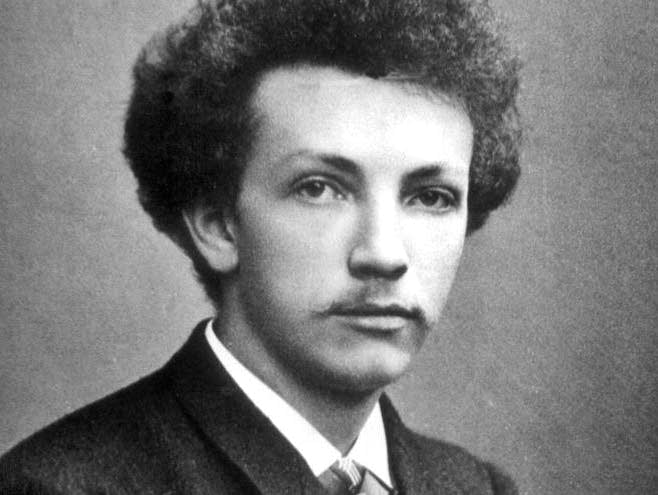
Richard Strauss 1864 -1949
Friedrich Nietzsche 1864 aged 20

The ‘apocalyptic’ opening scene …

From W B Yeats ‘Hound Voice’ –

“And in that terror’s name obeyed the call, And understood, what none have understood, Those images that waken in the blood.”

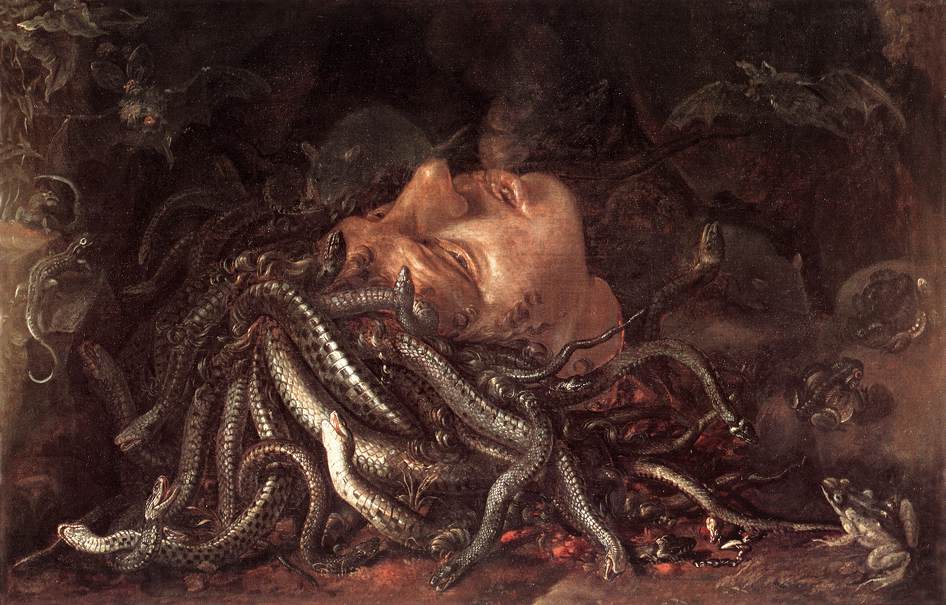
But ‘Stag’ is a celebration, even in death, of Medb’s (Medusa) power and beauty, and of the battle that looms on the horizon … the Feminine Apocalypse.

As in Blake’s ‘Vala’, or The Four Zoas (1797 …) and Shelley’s poem on the Medusa (1824), the opening scene turns Medb’s death into an apocalyptic event, distinguishing the forces of heaven and earth, of light and darkness.

But it is an Apocalypse where opposites are not in opposition but are struggling to attain balance. Medb’s beauty heals but it is a healing that entails embracing the reality of death and destruction, in order to transform a violent and corrupt form of civilization. She demands a total contemptus mundi and challenges us to look within and place our faith in that unknown divinity, our own buried lives.

Anonymous Flemish Master (c17)

The Fugitive Stag …

is an epic ‘questing’ film, with mythical elements, set in an apocalyptic ‘near-future’ – in a world very similar to ours.

is not ‘arthouse’ neither is it a high concept film, and yet it has elements of both, in that characters and their struggles are integral to the drama of a ‘goal-driven story’.

by Kendall Tabor Jr