
DEVS – mini series April 2020 on BBC 2

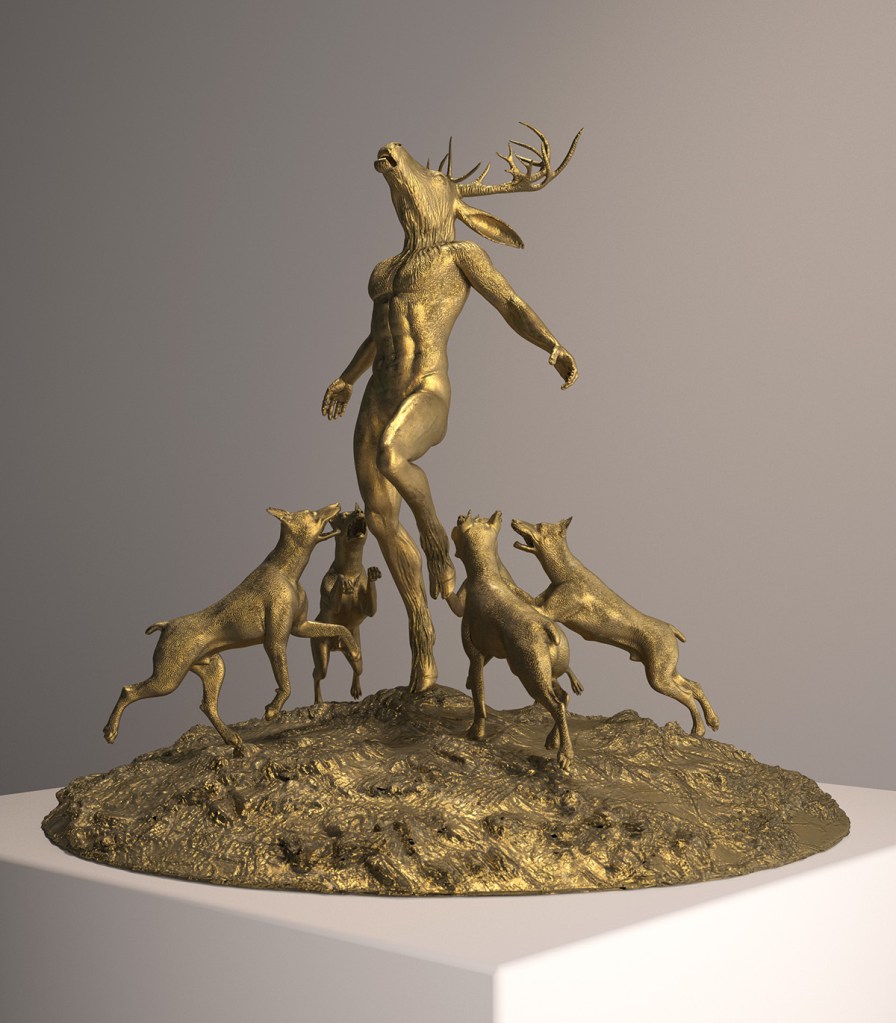
Started it in April – for some reason stopped after 10 minutes. Re-visited last week (with Annap) and really enjoyed it. Hooked. So many disappointing home grown series on ‘the BBC’ these last few years. Good to watch a series with a mystico-philosophical bent … sometimes. Not sure why a female actor was picked to play a young boy and there was no need to introduce a visiting US senator scenario. The statue? Bit over the top. Excellent cast … and, once again, a satisfying ending. Definitely 9/10 for me.

DEVS Nick Offerman as Forest, Sonoya Mizuno as Lily Chan. Photo Raymond Liu

Born in Tokyo, Sonaya was raised in Somerset England. Her mother is of half British and half Argentine descent and her father is Japanese. She graduated from the Royal Ballet School before dancing with several ballet companies in Germany, Ireland and Scotland.

Sonya Mizuno
Nick Offerman – American actor, writer, comedian, producer, and woodworker. Photo by Andy Kropa

81% AVERAGE TOMATOMETER

 75% AVERAGE AUDIENCE SCORE

The FX limited series Devs was the first foray into television by Alex Garland, the writer-director of Ex Machina.

The Nightingale

A BRILLIANT AUSSIE PRODUCTION FROM 2018

We both watched it last night – yes, harrowing in many parts, but a fascinating story (not familiar with the book) and an excellent film for Saturday night viewing. Good casting and a satisfying ending, not just for Ann ap. 9/10.

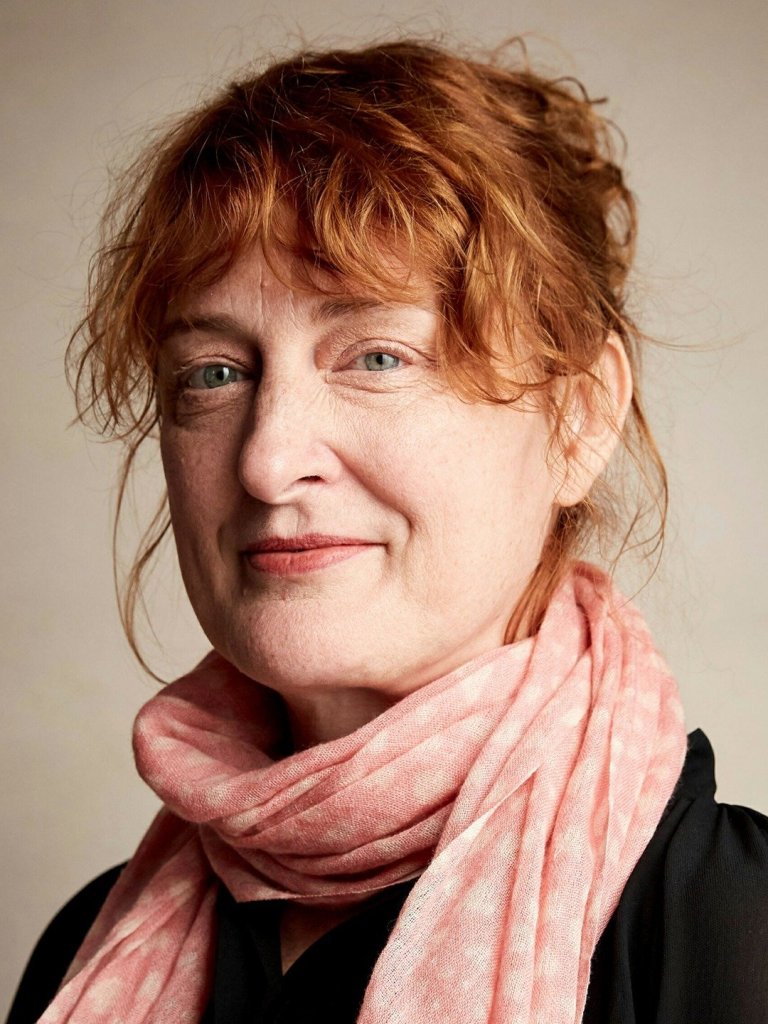
Aussie born Jennifer Kent, wrote, co-produced and directed The Nightingale. Photograph by Taylor Jewell

Rotten Tomatoes –

 86%

TOMATOMETER Total Count: 231

 73% AUDIENCE SCORE

Verified Ratings: 30

Silentium

She has not yet been born:
she is music and word,
and therefore the un-torn,
fabric of what is stirred.
 
Silent the ocean breathes.
Madly day’s glitter roams.
Spray of pale lilac foams,
in a bowl of grey-blue leaves.
 
May my lips rehearse
the primordial silence,
like a note of crystal clearness,
sounding, pure from birth!
 
Stay as foam Aphrodite – Art –
and return, Word, where music begins:
and, fused with life’s origins,
be ashamed heart, of heart!
 
Osip Mandelstam
Aphrodite
Osip 1891 – 1938

An ‘Open Sea’

Indeed, at hearing the news that ‘the old god is dead’, we philosophers and ‘free spirits’ feel illuminated by a new dawn; our heart overflows with gratitude, amazement, forebodings, expectation – finally the horizon seems clear again, even if not bright; finally our ships may set out again, set out to face any danger; every daring of the lover of knowledge is allowed again; the sea, our sea, lies open again; maybe there has never been such an ‘open sea’.” Nietzsche

Steadfast Tin Soldier by Hans Christian Andersen. 

The 1918 Fort Riley/Kansas/USA Global Flu Pandemic

Global pandemics

Russian Flu 1889/90 – 1 million dead

Asian Flu 1957/58 – from 1.5 to 4 million dead

Hong Kong flu 1968/69 – from 1 to 4 million dead

The Fort Riley/Kansas/ USA FLU of 1918

(Or even The GITCHELL FLU – after Private Albert Gitchell of the US Army)

(Wrongly called ‘Spanish Flu’ because Spain was neutral in The Great War and was thus the only country reporting honestly about the effect of the pandemic – how ironic!)

World population at the time was 1.8 billion

500 million infected

If we take the lowest estimate as accurate – 17.5 million deaths – then just under 1% of the global population died. This flu had little effect on the older population – probably because they had built up immunity during and after the Russian Flu.

Some, however, estimate that 25 million died, others 35 to 50 million

The epicentre: USA

In March 1918 Albert infected 100 fellow soldiers, as did many unknown soldiers who had caught it, in other army camps (just imagine the chronic crowded conditions) around the States. Thousands of these soldiers (the same applied to soldiers in Europe) were already suffering from the ‘usual influenza.’ It was these soldiers – first batch 84,000, second 118,000 – who carried the  deadly virus to the battlefields of France and then the rest of Europe. By June there were 31,000 reported cases in the UK alone.

Goodbye ‘Purple Fingers’ for another year – and ‘Diolch,’ Thank You, Dziekuje Ci …

ACTUALLY, WE HAD WHITE ONES THIS YEAR AS WELL.

Milicroques (Foxgloves) * by Jean Gebser

A butterfly dancing
by the sea,
a foxglove emerging
fragile and fierce
cleaving
to a granite wall:

A glittering chalice
captures the whole sky,
a single wing
bears the sun entire:
fate’s transformations,
and pure transference:

A flower
evolving into flight,
and flight
dissolving into light.

Milicroques is the regional name of a delicate blue flower that blooms on the walls of Santiago de Compostela (Province of Galicia). [J.G.] Gebser’s delicate-blue flower (flor de un azul delicado/zartblauen Blume) is more commonly known as the foxglove (digitalis purpurea, literally, ‘purple fingers’). Its long, bell-shaped, pale violet petals fit over the fingers, hence the Latin name.

Jean Gebser was a Polish linguist, philosopher and poet. He died in 1973.  He lived in Italy and then in France. He then moved to Spain, mastered the Spanish language in a few months and entered the Spanish Civil Service, where he rose to become a senior official in the Spanish Ministry of Education.