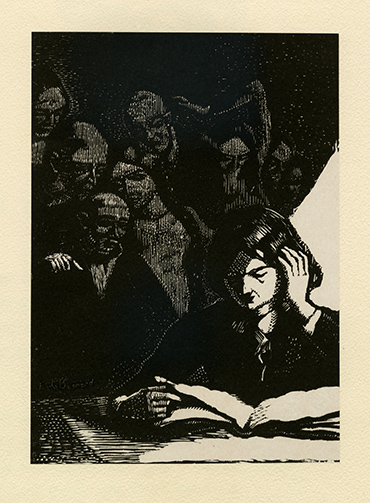
Émile Bernard, ‘Benediction’, woodcut from Baudelaire’s #Les Fleurs du Mal’ (1916)
Evil FateTo lift a weight so heavy,
Would take your courage, Sisyphus!
Although one's heart is in the work,
Art is long and Time is short.
Far from famous sepulchers
Toward a lonely cemetery
My heart, like muffled drums,
Goes beating funeral marches.
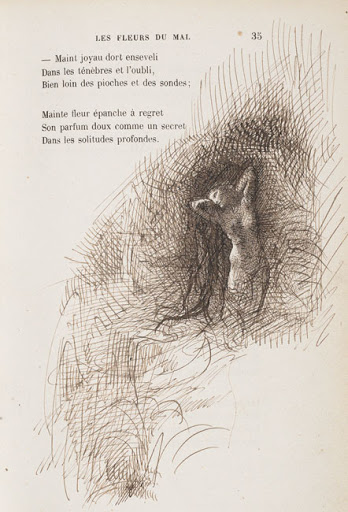
Many a jewel lies buried
In darkness and oblivion,
Far, far away from picks and drills;
Many a flower regretfully
Exhales perfume soft as secrets
In a profound solitude.
Baudelaire tr. William Aggeler(Flowers of Evil, 1857)
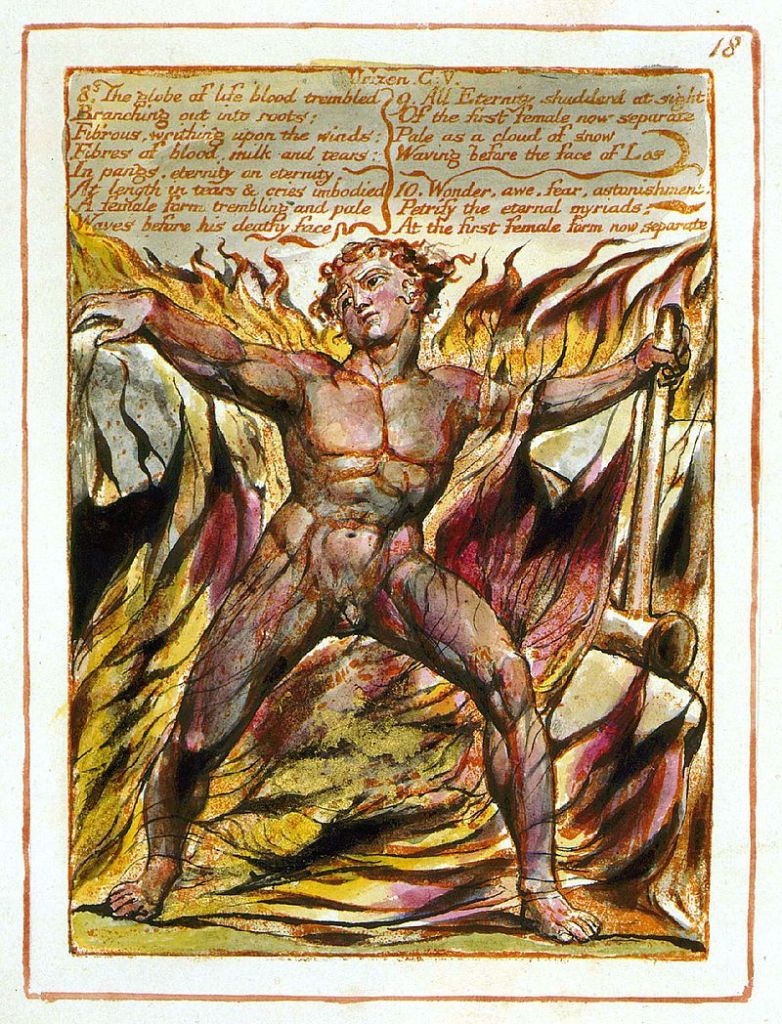
When Los joined with me, he took me in his fiery whirlwind;
My vegetated portion was hurried from Lambeth’s shades;
He set me down in Felpham’s vale, and prepared a beautiful
Cottage for me, that, in three years, I might write all these visions
To display Nature’s cruel holiness; the deceits of Natural Religion,
Walking in my cottage garden, sudden I beheld
The virgin Ololon, and address’d her as a daughter of Beulah
‘Virgin of Providence! fear not to enter into my cottage!’From Blake's sweet reminiscence of life at Felpham which occurs in the Second Book of Milton
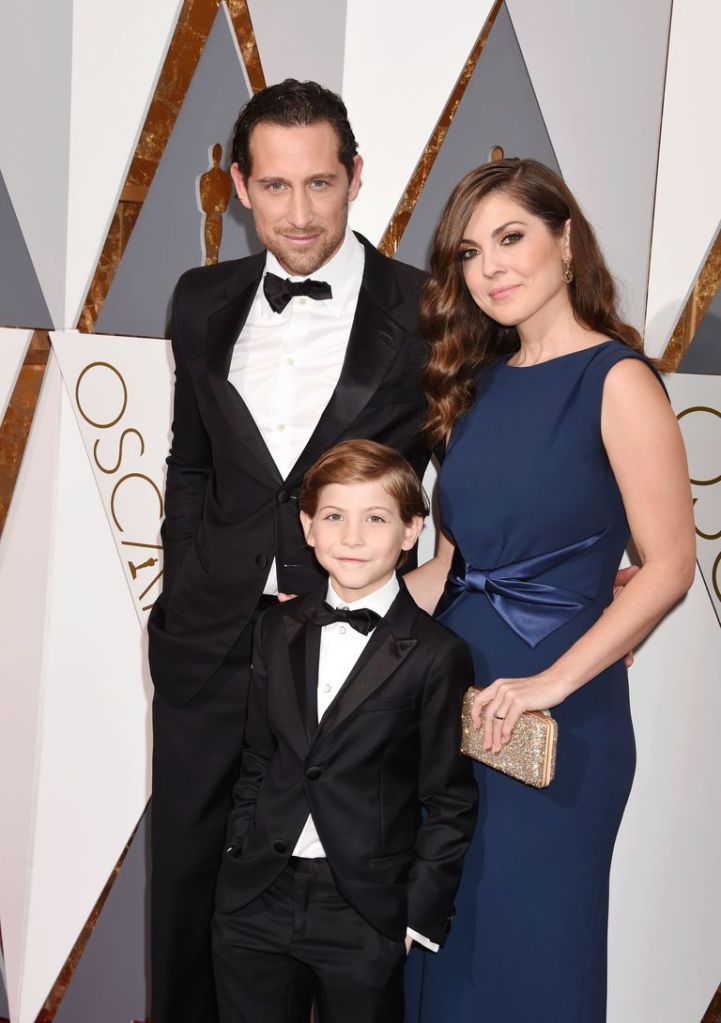
but moving story … Room (2015) on Netflix. Excellent performance by Canadian born Jacob Tremblay and Brie Larson. Although not a ‘child star’ she has been acting since her teens.
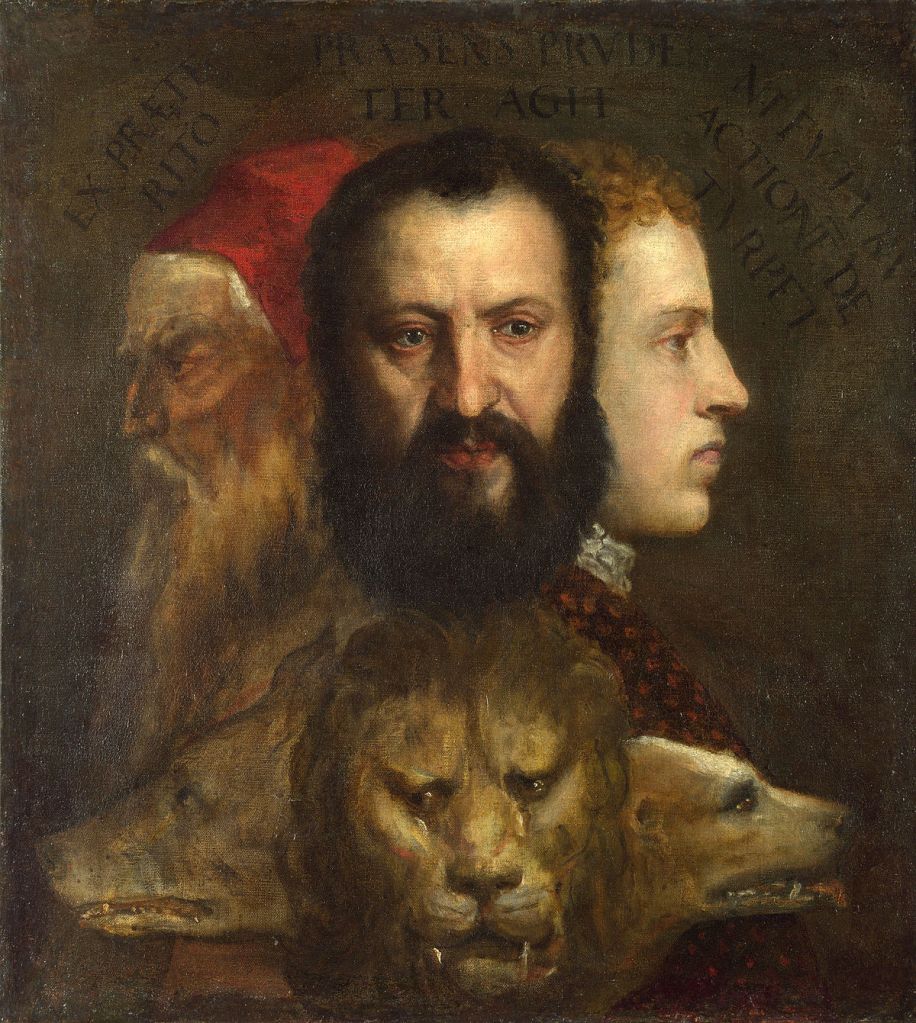
Many interpretations of Titian’s c. 1560 painting, commonly known as Allegory of Prudence: EX PRÆTE/RITO // PRÆSENS PRVDEN/TER AGIT // NI FVTVRA / ACTIONĒ DE/TVRPET(“from the experience of the past, the present acts prudently, lest it spoil future actions”.)
The many faces of …
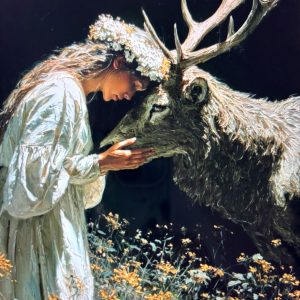
The adventure of the Fugitive Stag and its many faces … “Personifying the faceless … giving flesh to the non-existent” … when I find that director and producer!
Oh, how desperately I want to live;Immortalize the real,Personify the faceless,Give flesh to the non-existent!Life’s crushing dream may smother meI may suffocate as I dream, -And yet a light-hearted youth, perhapsWill say of me in time to come:Let us forgive his gloom – could it beThat it was really his secret drive?“He’s but a child of goodness and lightHe’s but freedom’s triumph!”(Aleksandr Bolk 05.02.1914)
Goethe's Heiß mich nicht reden, heiß mich...for me, until a goddess opens them!Don't ask me to speak - ask me to be silent,
for my secret is a [solemn] duty to me.
I wish I could bare my soul to you,
but Fate does not will it.
At the right time, the sun's course will dispell
the dark night, and it must be illuminated.
The hard rock will open its bosom; and
ungrudgingly, the earth will release deep hidden springs.
Others may seek calm in the arms of a friend;
there one can pour out one's heart in lament.
But for me alone, a vow locks my lips,
And only a god has the power to open them
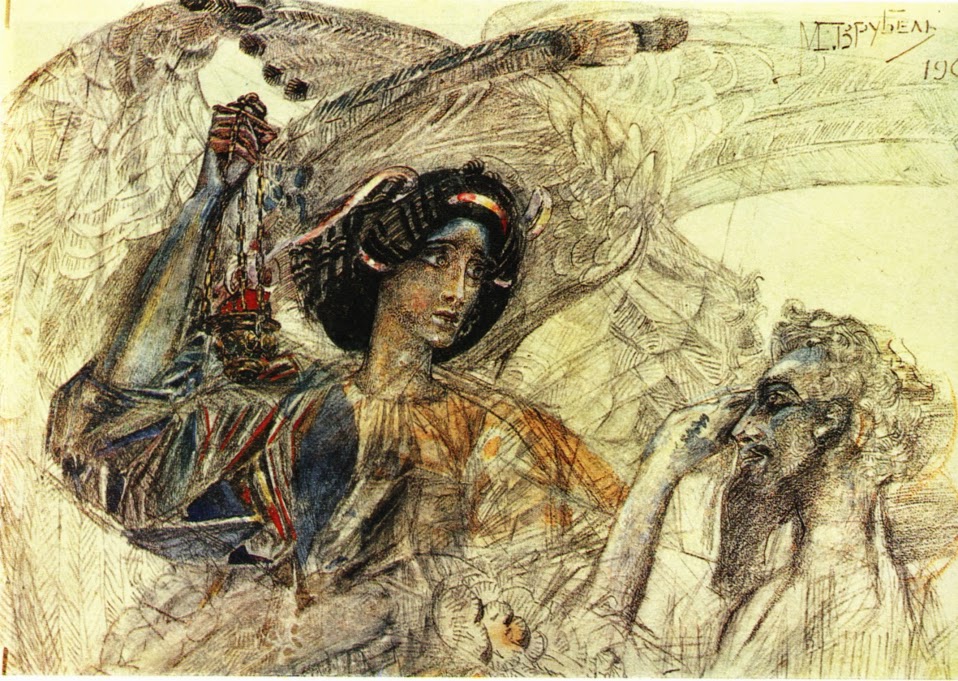
Alexander Pushkin, “The Prophet”

Parched with the spirit's thirst, I crossed
An endless desert sunk in gloom,
And a six-winged seraph came
Where the tracks met and I stood lost.
Fingers light as dream he laid
Upon my lids; I opened wide
My eagle eyes, and gazed around.
He laid his fingers on my ears
And they were filled with roaring sound:
I heard the music of the spheres ...
We bowed down before the scriptures
And were taken aback by the silence of the temple.
In the rays of the divine light
The smile of the Woman was remembered.
Souls united and silent,
In the same rays and within the same walls,
We perceived the solar waves
Above – on the dark cupolas.
And from that ancient gilding,
From those terrible depths,
Onto my holy-day descended Someone
With the smile of the tender Woman.(Blok 18 January 1902 St Isaac’s Cathedral)
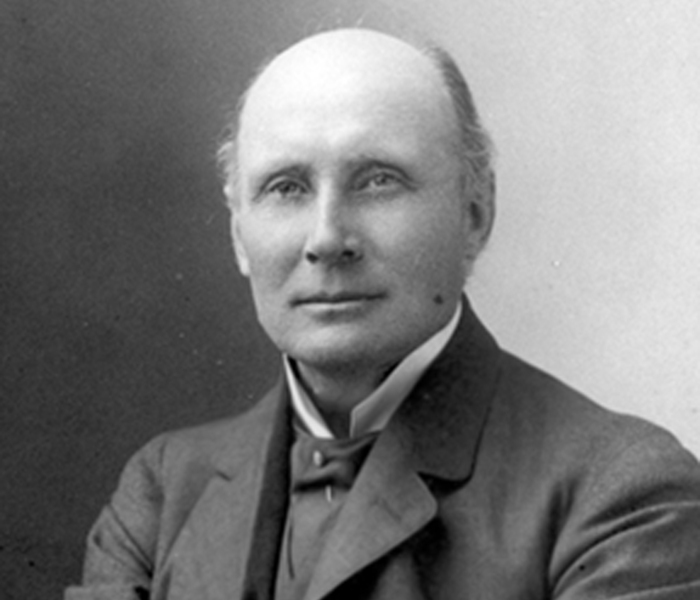
In the closing pages of Process and Reality, A N Whitehead condemns the Christian doctrine of God – “ the doctrine of an aboriginal, eminently real, transcendent creator, at whose fiat the world came into being, and whose imposed will it obeys” – as a fallacy which has infused tragedy into history; and he insists that when the Western world accepted Christianity, Caesar conquered: “The Church gave unto God the attributes which belonged exclusively to Caesar.”






 The Fugitive Stag