Fear is an eminently timely topic … fear today has become something like a test: be afraid, so you can prove that you are on the right side. Insulate yourself with fear … Not only does fear isolate a person from others, but it raises that person out of time. Fear is always of the moment, the present. It casts a person back into nature (for) fear exists only in the present tense. And what else is there that has no consciousness of the past of the future? The body. In the course of being afraid the body will be more important than anything else … in a state of fear, a person, more than anything else, reacts within the body’s corporeality …
From ‘Dostoevsky Reads Hegel in Siberia And Bursts Into Tears’ (A collection of essays on contemporary culture) by Laszlo F. Foldenyi 2020.
Hungarian critic, essayist and art theorist. Professor and Chair in the Theory of Art, University of Theatre, Film and Television, Budapest. He is also a member of the German Academy for Language and Literature.
Laszlo F. Foldenyib. 1952
One of the books I have on the go at the moment – combining morning contemplations or musings of a shamanic and philosophical nature. More to come from Laszlo
Great to be re-united with Aksel Hennie and Lisa Rapace
We didn’t really know what to expect – superb Norwegian production and comedic black humour at it’s best.Yes! But it takes a good acting duo to pull it off. Almost a ‘laugh-a-minute.’
OK, one or two ‘bits’ that didn’t need to be there, but it is black humour, after all – with some cutting satirical bits.
“It’s amusing and irreverent, bleak and repulsive — and therefore an exercise in cognitive dissonance, I guess. It’s definitely conceived more in sickness than in health. For better or worse. ’Till death by disembowelment or shotgun do we part. I’m gonna stop there”+ – John Serba … I couldn’t have put it better myself.
The three convicts on the run also played the terrible trio to perfection – Petter (Atle Antonsen), Dave (Christian Rubeck), and Roy (André Eriksen). Nils Ole Oftebro as ‘Dad’ – good to see him again. Stig Frode Henriksenwas a new face for us – not much of a role for him.
It’s labelled as an action thriller- by who! It’s a HORROR-COMEDY folks. Silly? Yes. Daft? Yes.
Director: Tommy Wirkola – and co-writer. Will have to look-up his Dead Snow (2009).
Tommy Wirkola – a Norwegian of Finnish heritage. That look, that smile says it all!
Joseph Brodsky writes:“We did not go to her for praise, or literary recognition, or any kind of approval for our work … We went to see her because she set our souls in motion, because in her presence you seem to move on from the emotional and spiritual – oh, I don’t know what you call it – level you were on.
You rejected the language you spoke every day for the language she used. Of course, we discussed literature, and we gossiped, and we ran out for vodka, listened to Mozart, and mocked the government.
Looking back, though, what I hear and see is not this; in my consciousness surfaces one line from thesame ‘Sweetbriar in Blossom’: “You do not know what you were forgiven.” This line tears itself away rather than bursting out of the context because it is uttered by the voice of the soul, for the forgiver is always greater than the offense and whoever inflicts it. This line, seemingly addressed to one person, is in fact addressed to the whole world.
It is the soul’s response to existence.
It is this, and not the ways of verse-making, that we learned from her.”
Anna’s protégé was Nobel poet Joseph Brodsky, who was drawn to her circle in 1961, a few years before she died. He spoke about Anna this way:
“She’s the kind of poet whose lines you unwittingly mumble to yourself, especially when you’re in trouble. I remember several times, when I would be sick in hospital, surgery, this and that, et cetera et cetera. I would find myself mumbling, completely unrelated to the situation, a few of her lines. Well, they are very memorable.”
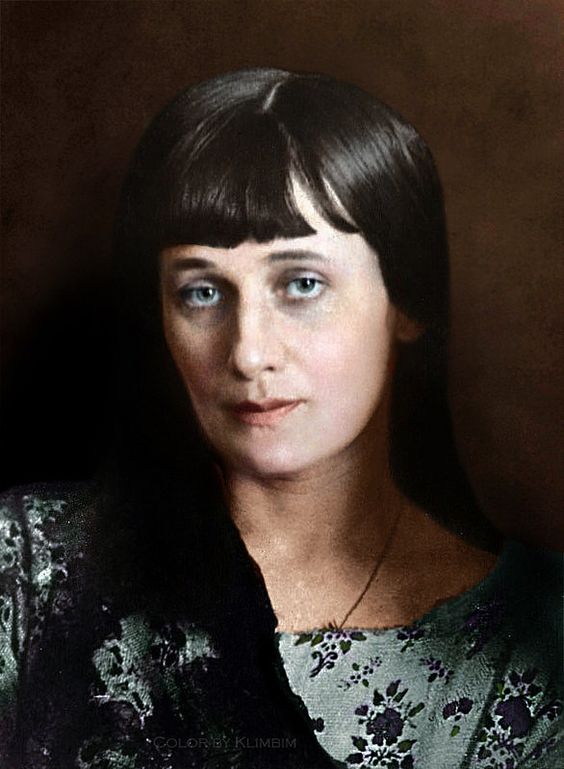
“She was simply, physically, visibly, beautiful. Big gray eyes. Sort of like snow leopards – you know those eyes, ya? Tremendous nose. She was one of the most beautiful women of the century, I think. Tremendous head. Just … absolutely majestic.”
Joseph was the favored protégé of the Great lady of Petersburg, as Anna was known. To hear him read her poems in Russian was an experience to make one’s hair stand on end even if one did not understand the Russian language (wrote Librarian of Congress Dr James Billington). Joseph Brodsky was the embodiment of the hopes not only of Anna, the last of the great Petersburg poets from the beginning of the century, but also Nadezhda Mandelstam, widow of another great martyred poet Osip Mandelstam. Both of them saw Joseph as part of the guiding light that might some day lead Russia back to her own deep roots.
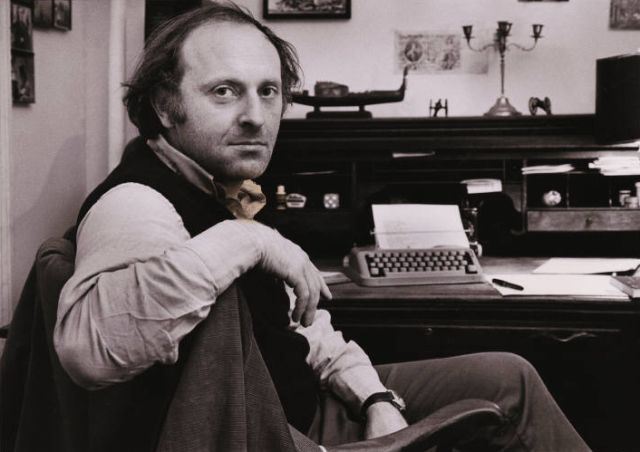
Joseph Brodsky 1940 St Petersburg – 1996 New York City
In 1963, Joseph’s poetry was denounced by a Leningrad newspaper as “pornographic and anti-Soviet. His papers were confiscated, he was interrogated, twice put in a mental institution and then arrested. He was charged with social parasitism by the Soviet authorities in a trial in 1964, finding that his series of odd jobs and role as a poet were not a sufficient contribution to society. He left Russia in 1972. In 1991, Brodsky became the Poet Laureate of the USA.
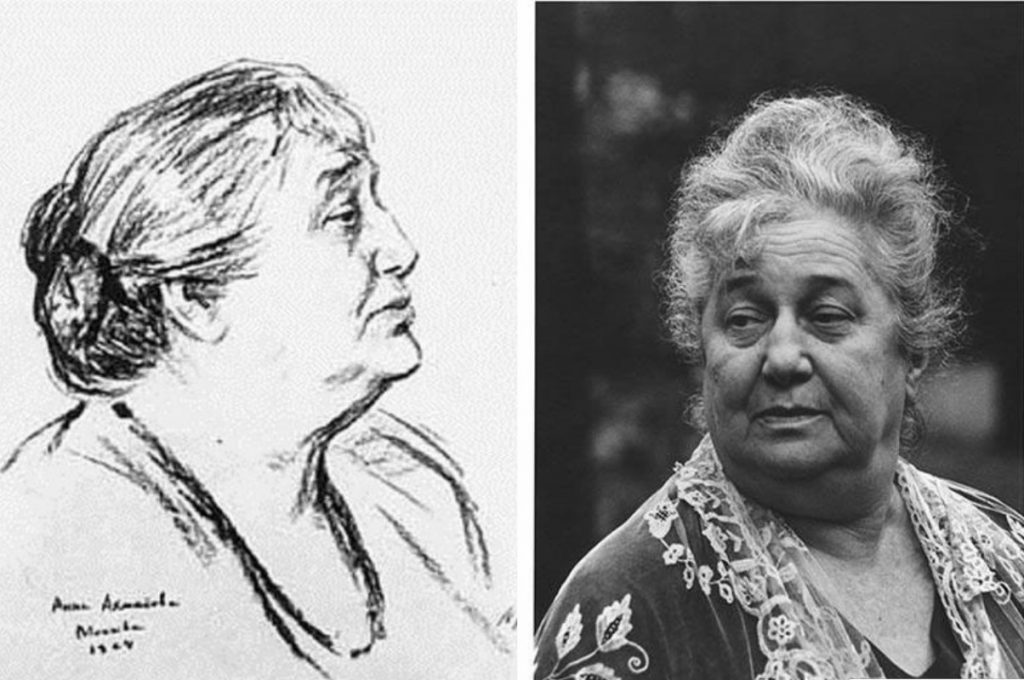
Anna Akhmatova was born in Odessa and died in Moscow. In her long career as a poet, she rarely engaged directly with St. Petersburg as a subject of inquiry in her mostly highly personal verse. Nonetheless, her life and work were so tightly interwoven with the tragic and tumultuous fate of Petersburg/Petrograd/Leningrad in the 20th century that few other cultural figures are so widely and instantly identified with the city. The measured, incisive authority of her mature poetry upheld the moral and aesthetic values of the pre-Revolutionary liberal intelligentsia, cementing poetry’s role as the human conscience of an often inhuman and amoral urbanenvironment.
… cementing poetry’s role as the human conscience of an often inhuman and amoral urbanenvironment.
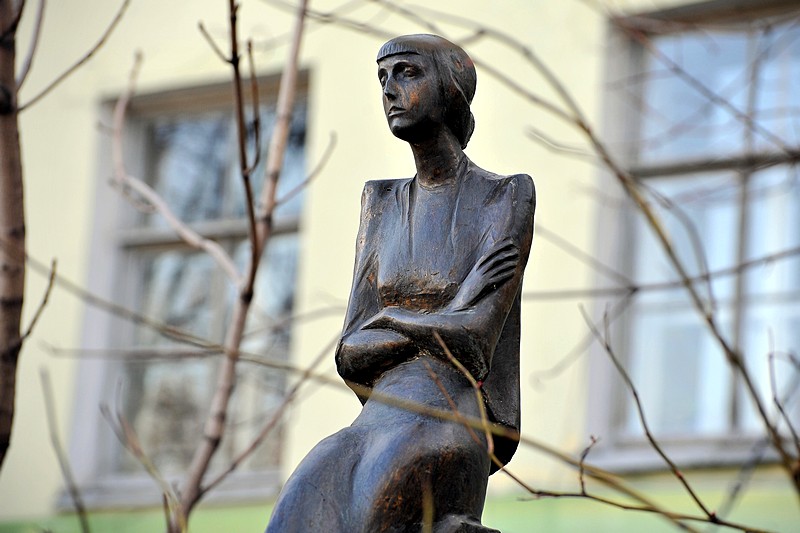
Monument to Anna Akhmatova erected in the courtyard of the Languages Department of St. Petersburg State University
Anna’s funeral was attended by thousands of mourners, and she was buried at the cemetery of the St. Petersburg suburb of Komarovo, where she had long had a summer residence. There and at her apartment in the Fountain House on the Fontanka River Embankment, she was regularly visited by a younger generation of artists and poets, most notably among them Joseph Brodsky, who by the time of her death had begun his own wearisome battle with the state, and who would be widely hailed her moral and artistic heir.
Especially in St. Petersburg, Anna remains a figure of universal admiration and affection. There are two museums in her honour there.
“You invented me. There is no such earthly being, Such an earthly being there could never be. A doctor cannot cure, a poet cannot comfort A shadowy apparition haunts you night and day. We met in an unbelievable year, When the world’s strength was at an ebb, Everything withered by adversity, And only the graves were fresh. Without streetlights, the Neva’s waves were black as pitch, Thick night enclosed me like a wall … That’s when my voice called out to you! Why it did I still don’t understand. And you came to me, as if guided by a star That tragic autumn, stepping Into that irrevocably ruined house, From whence had flown a flock of burnt verse.”
“a flock of burnt verse…”
Anna Akhmatovad 1966
An incredible human being: during her lifetime Anna saw famine and wars and repression and resistance and revolution. There were false charges and secret surveillance and purges and imprisonments and executions. Millions of people died. There was literary censorship. Her first husband was executed. Her second husband died from tuberculosis. Her third husband died in prison. Her son was imprisoned several times
Anna herself contracted typhus and tuberculosis. She lost touch with her family. She was labeled “half harlot, half nun,” probably with many connotations. The secret police kept her under constant surveillance. The majority of her life was lived out amid loss and grief and in poverty. Nancy Anderson writes, “Like a nun she saw herself as having a vocation that required her either to live on the charity of others or go without.” She did earn some money from translation. For thirty years she had no home of her own and lived as a guest with others. When she was expelled from the writer’s union, she lost access to food ration cards. By the end of her life, though, the government finally awarded her a small pension and an even smaller cottage.
Akhmatova could have fled like some others but chose not to.
She stayed to write the stories, to honor the dead, and to keep memories alive. James Joyce wrote in Ulysses, “You cannot leave your mother an orphan.” She later modified the line to “You cannot leave your Motherland an orphan.” There was much government opposition to her work and her apartment was secretly bugged, but she loved her country, and the Russian people loved her.
She and her friends helped each other—whether taking up collections for clothing or even memorizing each others’ words. Once, in August of 1920, Larisa Reisner, a former mistress of Akhmatova’s first husband, visited and found Anna “emaciated and dressed in rags, boiling soup in a borrowed saucepan.” Reisner used her connections to get food, clothing, and medical care for Akhmatova’s second husband, Vladimir Shileyko, and arranged for Akhmatova to get a library job.
Anna’s friends helped keep her work alive. Through a kind of whisper network, they preserved one another’s lines and stanzas before they burned the original copies. Requiem, one of Anna’s most famous pieces, maybe the most important, was “written” this way. She composed it over several years, but could not speak it or leave any trace of its words. It was a dangerous work, especially since it explicitly named Nikolay Yezhov, chief of the secret police during Stalin’s Great Terror.
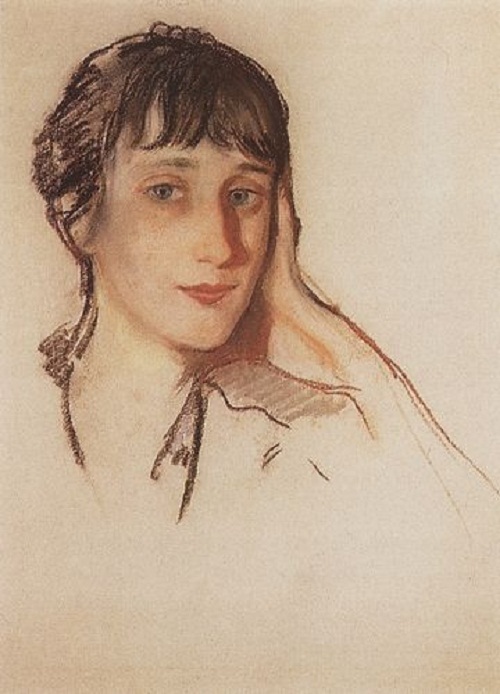
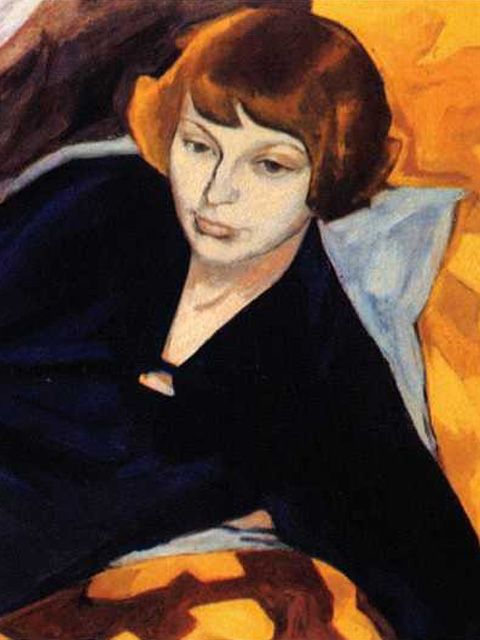
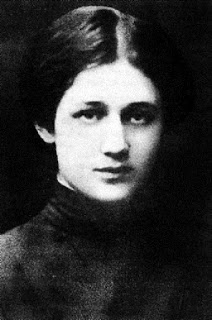
Anna aged 15 years
There is so much rubbish on TV and ‘in the movies’ nowadays. So called ‘historical dramas’ are nothing of the sort. Fiction – and poor fiction at that! There are so many good stories to tell. Anna’s life, for starters.
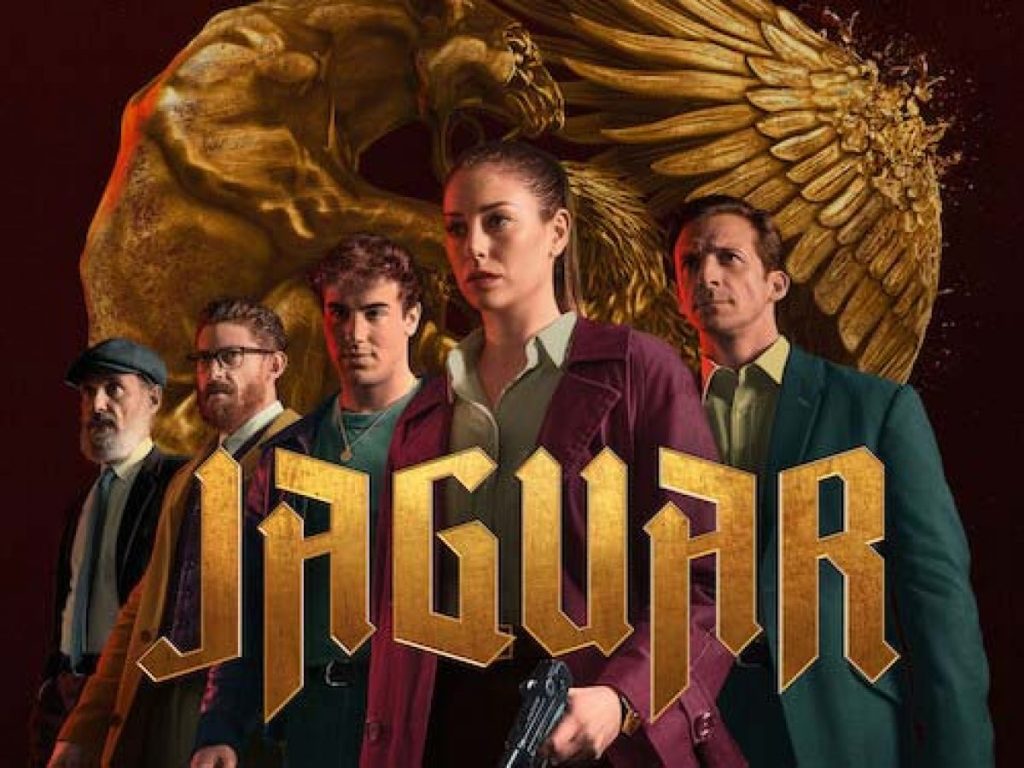
In the 1960s, Spain became a home to hundreds of survivors of the Mauthausen camp. Isabel, a young Spanish woman, is one of them. She is looking for Skorzeny, Europe’s most dangerous man, but she is notalone. Fact: The series’ true value lies in the little-known history it brings to light: the incarceration and murder of thousands of Spanish Republicans in Nazi concentration camps, and dictator Francisco Franco’s Spain having given safe haven to hundreds of Nazi war criminals after World War II.
FACT: The members of the Nazi-hunting group in “Jaguar” represent survivors among the half a million – Yes! – Spanish Republicans who fled Spain following the Spanish Civil War (1936-1939) and found themselves at the mercy of the Vichy government after Germany occupied France in 1940. The nationalist-fascist Franco regime in Spain refused to recognize their Spanish citizenship and classified them as enemies of the state – unbelievable. As a result, several thousand Spanish Republicans joined the French Foreign Legion or French resistance groups.
Thousands of these Spanish refugees were forced into French detention camps, and 48,000 were deported to Germany. Of these, 9,161 were deported to Nazi concentration camps, with 8,000 going to Mauthausen and Gusen. About 2/3rds didn’t survive and about 450 were gassed,.
The first train contained entire families that rolled into a German concentration camp — Mauthausen in 1940. The train was filled with 927 Spanish Republican refugees from southern France, but only the men were processed into the camp. The women and children were sent back to the French-Spanish border.
Spain carefully cultivated a myth that it remained neutral during WWII. The truth is that Franco’s fascist government played both sides: it was both an open sympathizer of the Nazi cause and a cautious nonbelligerent country trying to gain the favour of the Western Allies (‘Spain and the Holocaust: Contested Past, Contested Present’ by Baer & Corres).After the war, Spain welcomed Nazi war criminals (possibly hundreds) and allowed them to live freely within its territory – many of them found refuge in the houses of Spanish families, and others remained in hiding with the help of the Franco regime and the Catholic Church.
Great casting, once again, for another Netflix series. Liked the characters and the historical side of the story, although some of the what I call ‘action-bordering-on-slapstick’ at times did tend to trivialise the seriousness of the adventure.
Bianca Suarez
Ivan Marcos
I must admit, I hadn’t checked how many episodes there are, so from the abrupt ending, I assume there will be a Jaguar 2.
I NEED A FILM PRODUCER!Always inspired by his sentiments about drama. Keeps me going when those interfering doubts emerge!
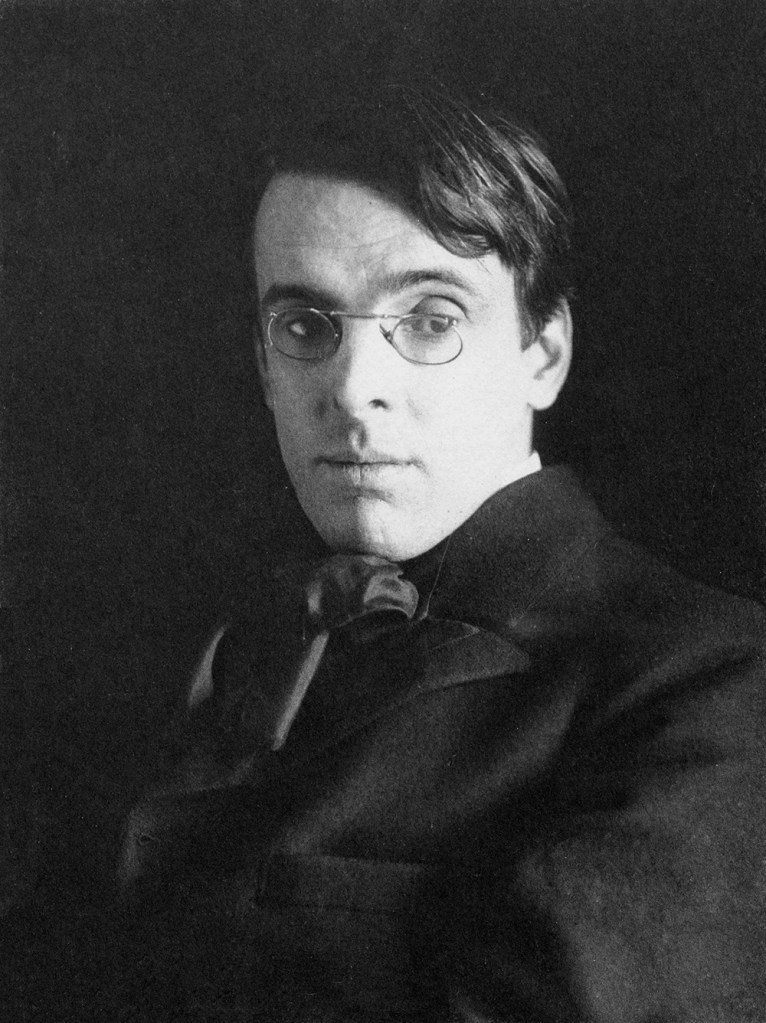
“I desire to show events and not merely tell of them … and I seem to myself most alive at the moment when a room full of people share the one lofty emotion,” he wrote. At Samhain 1904 Yeats spoke of a dramatic art which reveals the energy of the soul and stated that …
“we who are believers , cannot see reality anywhere but in the soul itself.”
For Yeats the most serious subject for drama (and surely film, especially nowadays) was this reality, which he saw as the struggle of the spiritual with the natural order taking place in the depths of the soul.
William Butler Yeats Yeats photographed in 1903 by Alice Boughton
“We who are believers , cannot see reality anywhere but in the soul itself.”
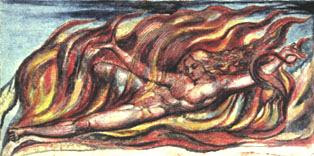
William Blake from ‘The Marriage of Heaven & Hell’









 The Fugitive Stag