Swinburne (1837-1909) insisted that Medusa’s presence is another Venus “grown diabolic in ages that would not accept her as divine“.
“Its horror and its beauty are divine. Upon (her) lips and eyelids seems to lie loveliness like a shadow … Yet it is less the horror than the grace which turns the gazer’s spirit into stone “… Shelley (1819) from his ‘On the Medusa of Leonardo da Vinciin the Florentine Gallery Shelley.’
Swinburne: “She is no benevolent and sympathetic Christian deity or Pieta, but a rough beast come to exorcise the world of its pale Christian phantoms.”
This so called ‘monster’ initiates Guy on his path to redemption.
Set in a parallel world almost exactly to ours, the Fugitive Stag tells the story of what happens when history and myth become embodied in a single form, that is both goddess and woman … something new … something altogether new …
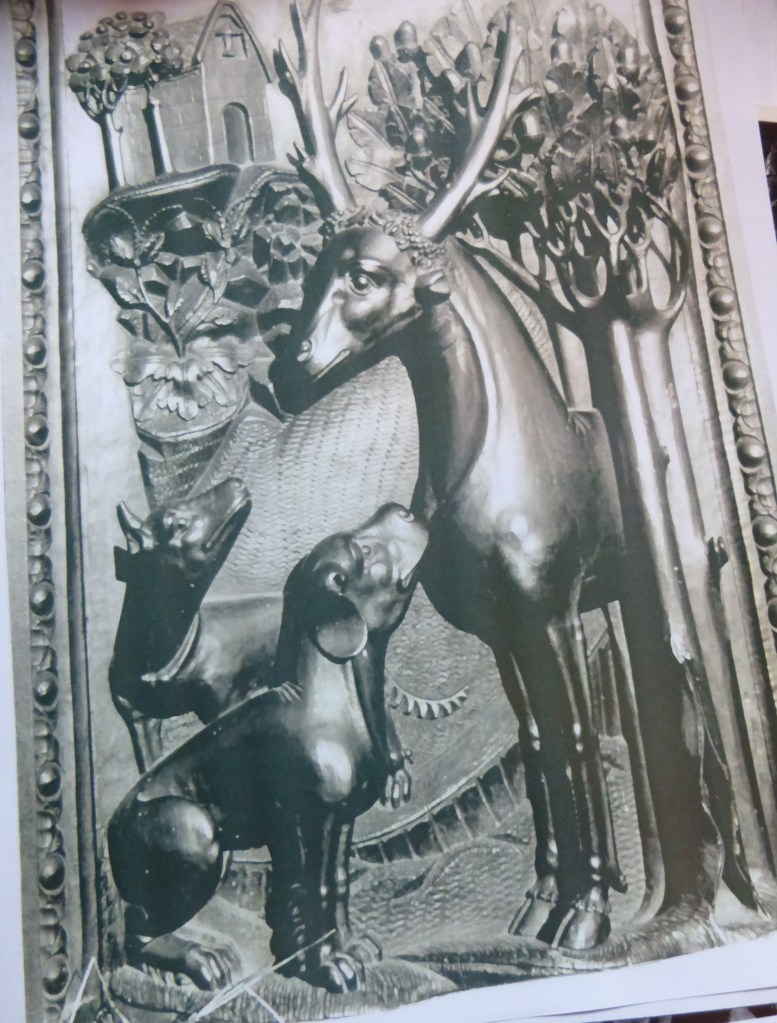
Francis Coppola’s ‘Apocalypse Now’ (1 December 1979)’s foundation text was Joseph Conrad’s ‘Heart of Darkness’ novella of 1902. Many poems have inspired The Fugitive Stag but in a real sense its foundation consists of a half a millennia old German or Belgian stag carving and a late C.19th painting by the Norwegian artist Edvard Munch, entitled ‘Madonna’ (1894/95), also entitled ‘ ‘The Lady,’ ‘Loving Woman.’
Munch’s Madonna is one of the most spectacular Madonna’s of the modern era – a sexualized Madonna. This is Madonna as Munch’s redefinition of femininity projected onto the realm of the divine – the very opposite of a patriarchal longing for a return to the idealization of womanhood.
One of the most important and best-known motifs of Munch’s oeuvre, ‘Madonna’ was at the centre of his “Frieze of Life” series. The motif exists in several versions and originally bore the title ‘Woman making Love’. The painting was first displayed in a frame decorated with sperm cells and a foetus.
Who would have thought that a carving depicting a Christian saint’s conversion – his name was St Hubert – would join one of the most iconic ‘Goddess’ paintings of the late nineteenth century, in providing the foundation for an epic adventure story in the early 21st century!
Munch’s painting provides the central motif or thread that runs through the ‘fugitive stag’ – the flesh, the hair, the Look or Gaze, sensuality, femininity etc, uniting in herself the different faces of Goddess, the Eternal Feminine.
Since the adventure of ‘The Fugitive Stag’ emerged and developed in my psyche as a series of living, dynamic scenes, I have also ‘seen’ it as a graphic novel. In fact, it is a story that also cries out … screams at times … for that format.
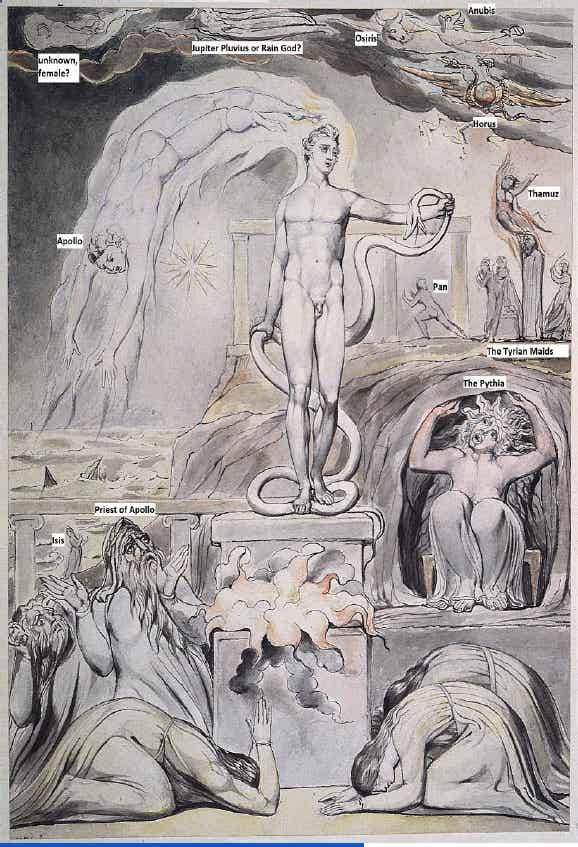
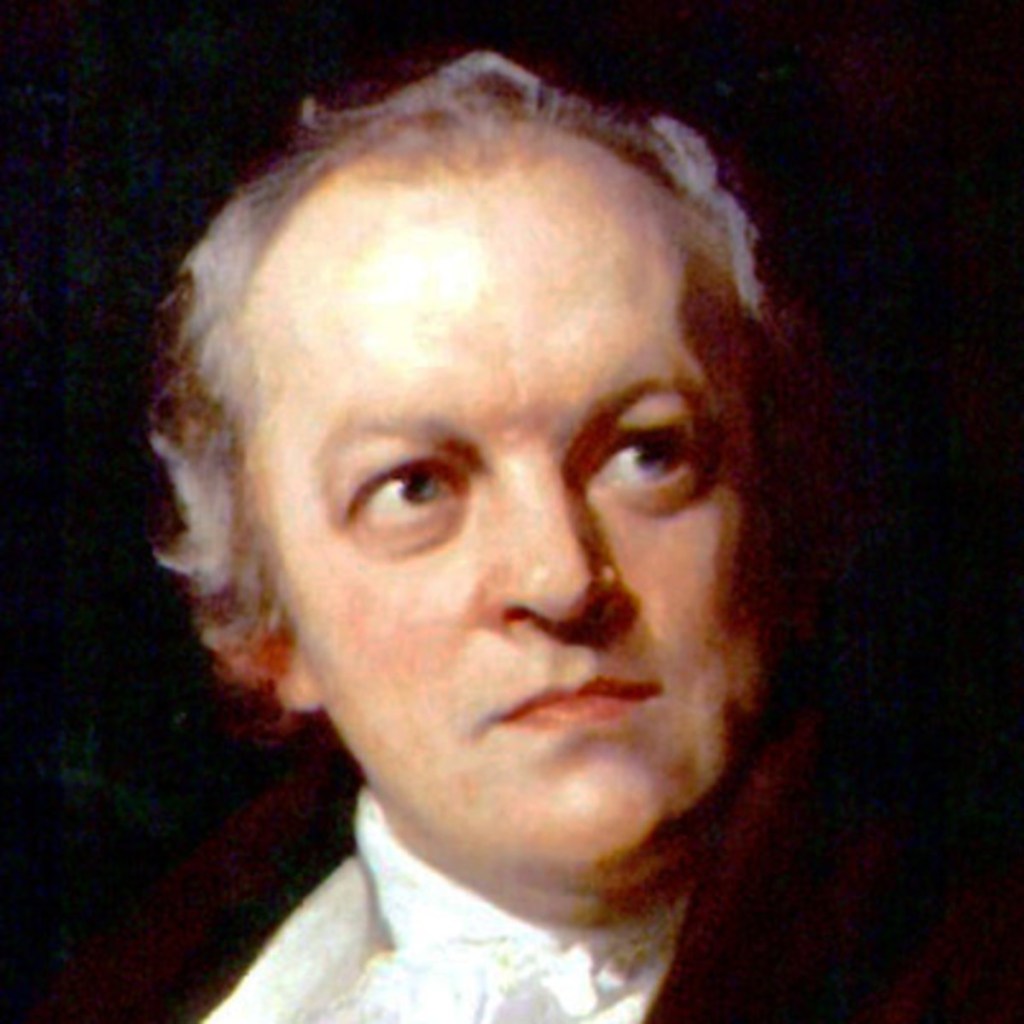
It would be in the style of Will Eisner’s ‘A Contract with God.’ An exciting possibility. And musing on graphic novels, I imagine another Will, William Blake (who died not far off 200 years ago) applying for a job to illustrate a modern graphic novel in 2019. He’d probably bring a few of these, from his portfolio, to the interview …
Early autumn morning hesitated,
Shying at newness, an emptiness behind
Scorched linden trees still crowding in around
The moorland house, now just one more wallstead
Where youngsters in a pack from god
knows where
Went rip-roaring wild and yelled and wrecked.
Yet all of them fell silent when he appeared,
The son of the place, and with a long forked stick
Dragged an out of shape old can or
kettle
From under hot, charred, half-consumed house-beams;
And then, like one with a doubtful tale to tell,
Turned to the others present, at great pains
To make them realise what had stood so. For now that it was gone, it all seemed Far stranger: more fantastical than Pharaoh. And he was changed: as from a far-off land.
Leonor Fini (1907 – 1996) staged woman as an alternative path to the world destroyed by man. In a 1993 interview, Fini said of the woman who confronts the viewer with a steady gaze:
“She is woman, symbol of beauty and deep knowledge, the essential element of life, the primeval material, because she knows how to survive the cataclysm.”
The End of the World (1948)
Leonor Fini in Arcachon, France, in 1940 (She “was a bit of a goth before goth”)











 The Fugitive Stag