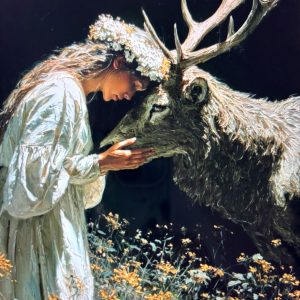
‘Gospel of the Fallen Angel’ – go on buy a copy … if you dare!
ENERGY IS ETERNAL DELIGHT NOT REASON OR RATIO. Always let your creative projects be governed by this principle.
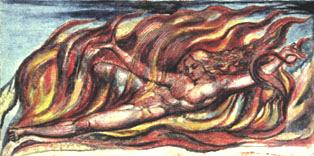
Energy is an eternal delight, and he who desires, but acts not, breeds pestilence. Those who restrain desire, do so because theirs is weak enough to be restrained; and the restrainer or reason usurps its place & governs the unwilling. And being restrain’d it by degrees becomes passive till it is only the shadow of desire. William Blake in his ‘Marriage of Heaven & Hell.’

Towards the end of the old millennium, I woke up one morning from a deep sleep, and, putting pen to paper, this is what I wrote:
“Gnosis!
As I wake up , I know
the futility of ‘centring’ on anything,
be it the ego or the so-called ‘higher’ or real self!

I was cut loose from slavery of all kind
including all aspects of ‘The Self, even in a good and positive sense.

This is a truth that ‘got me’,
and entered deep into my guts.

It was as if all my awareness is now centred in this way of knowing.

It was telling me that this faculty of knowing
is as real as seeing with the physical eye.
It is as real as my vasectomy was!
An ‘embodied’ knowing nevertheless;
as emotional as it is intellectual, as physical as it is mental.

And yet it is a knowing that has nothing to do with ‘me’.
Indeed, having an ‘I’ is a limitation,
a form of slavery.

‘I wasn’t an ‘I’ but beyond ‘I’ and a negation of ‘I’
and yet I was ‘me’ without having to be ‘me’”
9 December 1999.
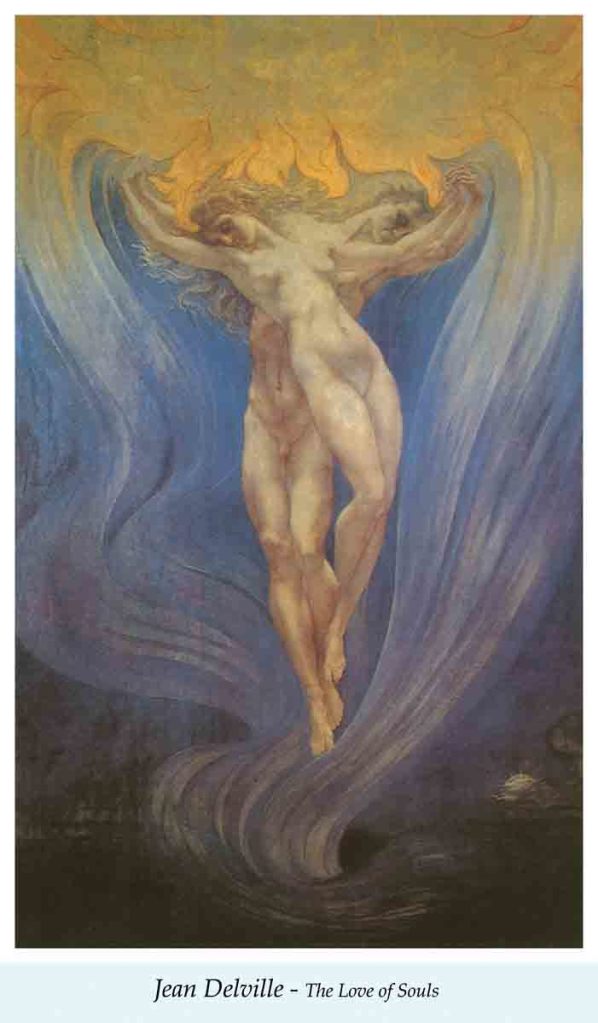
We are constantly in flux and yet … and yet paradoxically, there is ‘in’ (or is it ‘around’ us?) all of us a space that is ‘inviolate:’ Thomas Hardy: “The great inviolate place has an ancient permanence which the sea cannot claim.”
William Blake: “In your bosom you bear you Heaven and Earth & all you behold; tho’ it appears Without, it is within, it is in your Imagination.”
It is what Blake names GOLGONOOZA. City of Art & Imagination – outside time, space and nature.
He or she who sees the Infinite in all things see the Divine. She or he who sees the ration only sees herself or himself only(Blake)


“Morning of the Carnaval” from “Black Orpheus” Морин Хуурын Чуулга https://youtu.be/qBu6jCcG5Bg via @YouTube
Black Orpheus was written by Brazilian composer Luiz Bonfa as a theme for the 1959 Portuguese film “Orfeu Negro”(Black Orpheus). There are different sets of lyrics written to this tune. The English verse “A Day in the Life of a Fool” by Carl Sigman is widely known in jazz circles.
‘Just came across this – the first song! – I know nothing about the artist etc except what I hear …
“Дурлал”, “Чи Минийх” Морин Хуурын Чуулга ft Б.Батчулуун (МУУГЗ) https://youtu.be/NTuZEq5ho_8 via @YouTube
An autobiographical passage from chapter one of my book ‘The Goddess, the Church and the Green Man‘
I grew up in Northern Snowdonia, Wales, where my father was a parish priest in the University city of Bangor. Our home was about a mile or so from the Menai Straits, which divides the mainland from the ancient Druidic island of Mona or Anglesey. To the south we had an unobscured view of the twin peaks, Dafydd and Llewellyn, named after the thirteenth century princely brothers of Gwynedd. On a clear day, the summit of Snowdon or ‘Eryri’, as it is called in Welsh, is visible to the West. It means the Haunt of Eagles.
My mother came from a family of fishermen in Conwy, a picturesque walled town on the North Wales coast, famous for its castle. She loved the sea. My father’s family were quarrymen, and his loyalty was to the mountains. Living in Bangor gave me the best of both worlds. A regular childhood journey that made a lasting impression on me, was the six-mile trip to my paternal grandparents’ home at Bethesda in the Ogwen Valley. A journey of stark contrasts, both sea and mountain greet you in that short distance. In less than half an hour, my sisters and I had exchanged our green playing fields for numerous grey hills of discarded slate. And yet ‘the tips’ were located within some of the most beautiful mountain scenery in Britain.
But it wasn’t the breath-taking Ogwen landscape that captured my imagination during those early years, or the slate graveyards, where countless hours were spent at play. It was an ordinary, rather drab-looking dwelling place, that we passed en route to Bethesda, called ‘Halfway House’. I assumed that it was half-way between Bangor and Bethesda, but to this day I have never actually measured the distance between the two. What intrigued me was the fact that it was half-way to somewhere, a place in-between, neither one nor the other. Fascination with the in-between has remained with me to this day.
My first book ‘Honest to Goddess’ (1998) was never edited properly – a task that was then out of my hands. This is my edited copy, with a new title, inspired by a childhood favourite, ‘The Lion, the Witch and the Wardrobe’. A new chapter was intended, but ‘it’ became the foundation for my second book and, much later, a screenplay – ‘Gospel of the Fallen Angel’ (2011) and ‘The Fugitive Stag’ (2020) respectively.


I love this quote – cited in ‘APOCALYPSE WITHHELD: ON SLOWNESS & THE LONG TAKE IN BÉLA TARR’S SATANTANGO’ written by Janice Lee and Jared Woodland 15 May 2014
Cinephiles often compare Tarr to Andrei Tarkovsky. In response to this correlation, Tarr says:
“The main difference is Tarkovsky’s religious and [I am] not… [h]e always had hope; he believed in God. He’s much more innocent than… me… Rain in his films purifies people. In mine, it just makes mud.”

It is a seven hour long adaptation of the first novel by fellow Hungarian László Krasznahorkai, called Sátántangó. Gerry writes “Sátántangó is a strange and bleak work, and one of the most pessimistic about humanity that I can recall ever having read.”
Víg Mihály – Filmzenék Tarr Béla Filmjeihez https://youtu.be/Qtvh4wWZhZI via @YouTube
Enjoy – my favourites 11:18 Kész Az Egész 19:36 Eső I.
Mihály Víg is a 62 year oldHungarian composer, poet, songwriter, guitarist and singer. Béla Tarr, 64, is a Hungarian filmmaker. His body of work consists mainly of art films with philosophical themes and long takes.


Paolo Conte – L’Orchestrina https://youtu.be/H26TJFoR_SY via @YouTube

Enjoy his music!
Paolo Conte is an Italian singer, pianist, composer, and lawyer notable for his grainy, resonant voice. His compositions are evocative of Italian and Mediterranean sounds, as well as of jazz music and South American atmospheres
Whatever our political persuasions and opinions regarding to ‘Brexit or not to Brexit’ …
The European Union (Withdrawal Agreement) Act 2020 (c. 1) – an Act of the Parliament of the United Kingdom that makes legal provision for ratifying the Brexit Withdrawal Agreement and implementing it into the domestic law of the United Kingdom …
has today been signed by EU leaders, ie the deal formally ending Britain’s membership of the European Union. It is now law. Ursula von der Leyen and Charles Michel, heads of the European Commission and Council, put their signatures on the withdrawal agreement after it was approved by the UK parliament this week. This evening, Prime Minister Boris Johnson signed it too, meaning the UK will be leaving the EU on 31 January
Maybe today we need more people with the spirit of the ancient Welsh saying (C12/13) ‘a fo ben bid bont’ – a mantra I was nourished on from an early age, by my father I love the alliteration. It means ‘The one who would lead must be a bridge’.
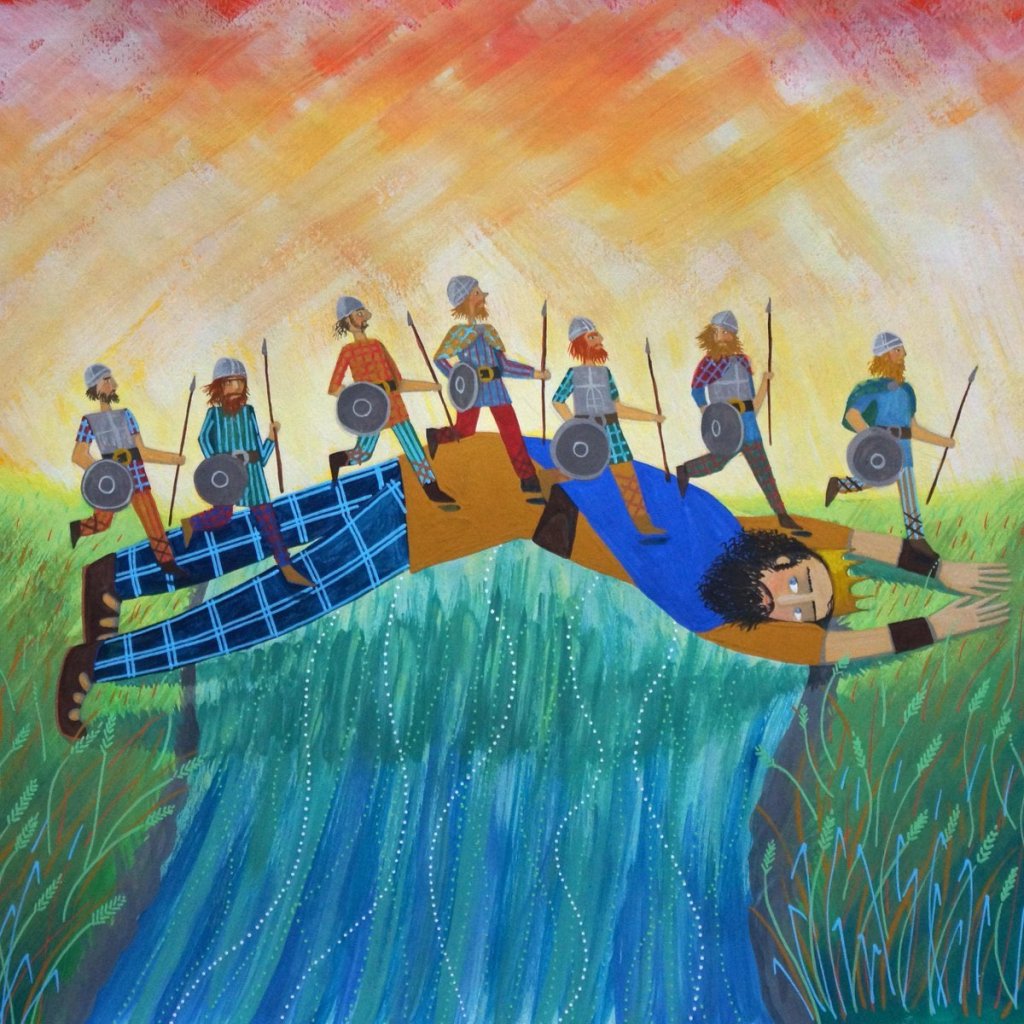
In the Welsh folk-law classic The Mabinogion, the story is told of a giant king called Bendigeidfran. His troops, whom he had led over to Ireland on a mission to rescue his sister Branwen, were unable to cross a broad river to pursue the enemy. Bendigeidfran lay across it, making himself into a human bridge for his men to march over
| The saying can only be taken so far. A bloody battle ensued. Bran lost! But the saying lives on in the Welsh psyche – an integral part of the British psyche – and the ‘twenties’ will need even ‘enemies’ and people who really hate and dislike each other (and make no mistake, ‘Westminster’ 2020 is still a microcosm of them all) to find common ground in order to build some new bridges for the good of us all. |
 The Fugitive Stag