Encounter

 The stranger on the way - we look at each other
 And our tired eyes ask:
 What have you done with your life?
 Be silent! Be silent! Leave all laments!
 Already it becomes cooler around us,
 The clouds dissolve in the vastnesses.
 I think we shall ask more no longer
 And nobody will escort us to the night.

 Georg Trakl
The Stylite by Rilke
In one great crowd, they pulsed above him — those
he either damned or blessed, condemned or chose.
Surmising he was lost, he looked aloft.
Escaping from the peoples’ stench, he rose
with clawing hands: he climbed a pillar's shaft
that seemed to rise forever, till it soared
no more. He started, all alone up there,
to match his sins, which were without compare,
against the shining glories of the Lord,
which had no end. He matched, but he could see:
the Other only grew, inducing awe.
And shepherd, farmer, rafter — each man — saw
him dwindling down, except when he
was wholly rapt in discourse with the skies
(which sometimes filled with rain, sometimes were fair).
And all the time, his howls, like wailing cries
that filled all faces, poured down from the air.
And still he did not see them there
for years, as all that crowd coursed down below
and ceaslessly replenished, and the bright
gear of the nobles never reached that height
to which its gleaming couldn't go.
But up there, when he felt close to damnation —
flesh torn to shreds by all their stubborn wars —
forlorn, and with a desperate, last-ditch yell,
he shook those daily demons off, and down
they thudded on the foremost ranks. They fell
in ponderous clumsiness from festering sores.
Gross maggots fell on every open crown,
and crawled in velvet propagation.(Tr. Len Krisak)
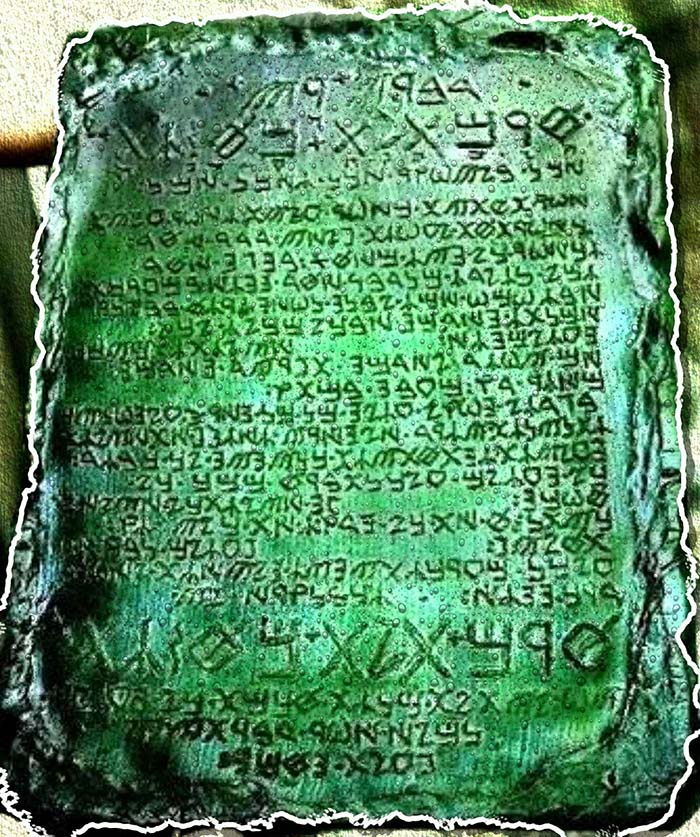
  1 These words are True, concerning the Stone of the Philosophers.

 2 What rises above, comes from that left below, and what is below comes from the above, to work the miracle of creation of the One Stone.

 3 All things originated from the Philosophers Stone by a single process.
 4 The Stone’s Father is the Sun, its Mother is the Moon.

 5 The Wind carried the Stone in its womb, the Earth breast fed it.

 6 The Stone is the Father of all works of wonder' in the world,
 its power is complete.

 7 With the colour of Fire and ashes, our Stone comes up from the earth,
 You must separate the earth from the Stone,
 the precious from the gross, gently with great industry.

 8 The Stone, arises from the earth and descends from heaven;
 thus it gathers to itself the strength of all things above and all things below.


 9 Thus when you have the Philosophers Stone, the light of lights,
 the darkness of ignorance will flee away from you.

 10 In the Stone is power, strong with the strength of all power,
 for the Stone will penetrate all mysteries and dispel all ignorance.

 11 Thus, was the Human world created.

 12 In the future, wonderful developments will be made,
 and the Philosophers Stone, is the Way.


 13 I am Hermes the Threefold Sage,
 so named because I hold the three elements of all Wisdom,
 the Animal, the Mineral and the Vegetable.
 My sermon about the operation of the Sun is now completed.

800AD Tr 1140 this tr.(C)2008 Donald E.Teeter
TOM SLATER DEPUTY EDITORSPIKED23 FEBRUARY 2021
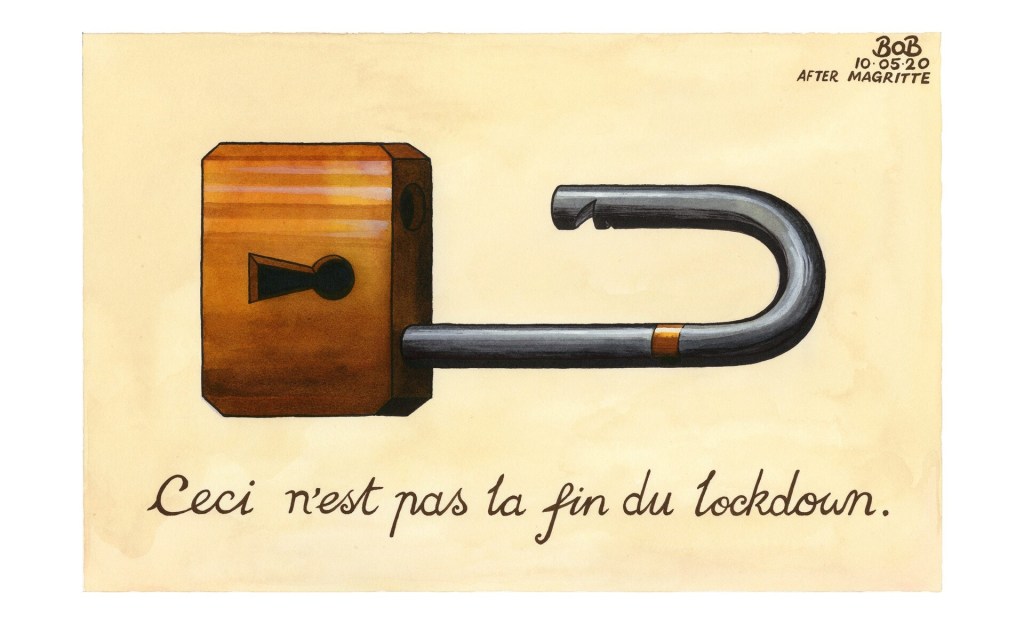
We talk a lot about the economic, health and civil-liberties costs of lockdown. And rightly so. The damage done by this global experiment in authoritarianism to our livelihoods, liberties and physical and mental wellbeing will take a long time to repair.
But what of the social cost of a year of us keeping our distance from one another; of being told to see one another as vectors of disease; of being encouraged to blame and snitch on one another; of being conditioned to see a crowd of our fellow citizens and wince? What damage will this do to community and solidarity?
Lockdown risks accelerating all manner of problems that we were already dealing with. Social atomisation, the fraying of community, is one of them. From trade unions to churches, institutions that once provided a sense of shared purpose have been withering away for decades. Panic after panic has encouraged us to think the worst of other people.
As the Office for National Statistics put it in February 2020, ‘We are engaging less with our neighbours but more with social media’, and as for our communities, ‘fewer of us feel like we belong to them’. Just add to that a year of house arrest, Zoom and keeping our distance.
Here’s hoping opening up will remind us just how much we were missing – even before Covid struck.Aye, opening up in England!
22 February 2021from Rev’d Geraint ap IorwerthDear Mr Drakeford.
Apart from a few politically motivated differences, you have slavishly followed England with its Lockdown mentality and policy.
‘Lockdown’ is a prison term (American at that!), used to reinforce the fact that a person is a prisoner and therefore guilty of a crime. It is meant to break the spirit of the guilty person and reinforce the fact that he or she is not free.
Living in what is supposed to be a liberal democracy, I find your government’s continual use of the word ‘Lockdown’ highly problematic and counter-productive.
In fact, I find your continued use of the word ‘Lockdown’ highly offensive, both morally and spiritually.
Its long-term damage to the country– emotionally, mentally, creatively, morally - is yet to be assessed.
Only you and your cabinet know why you chose to use this word and all the associations tied to it. Maybe it was due to intellectual laziness? Political cowardice? A lack of imagination? Maybe all of these and more?
In the past I have supported people, in other countries, who have been under house or country arrest – obviously for political reasons - as they fought for their democratic rights. In these challenging times, Wales could have done things so differently. You chose not to, and sadly, people’s trust in the way we are governed is suffering.
Rule by fear does not work in the long term. At the moment that ‘fear’ in Wales – ‘Cymru Fach’ - is destroying lives, splitting families and nurturing a sense of hopelessness that is far more dangerous than Covid19.
If I am guilty of a crime then charge me.
If I am a prisoner, then at least have the courage to use that word.
‘Lockdown’ is a convenient propaganda tool. A lazy tool. A highly offensive tool. Wales deserves better.
Innocently yours, Geraint ap
Good stuff recently from Luxembourg, France, Germany, and now it's on to Italy and Sky Atlantic's 'The Devils'-produced by Lux Vide and Sky Italy.Comment: 'Like many other great Netflix series, Tribes of Europa ends with an agonizing cliffhanger. There’s currently no word about a second season, and the first finishes with plenty of questions around the plot.' And yet - I was satisfied with the way we bid adieu to the main characters... I still think that 'Black December' would have been a better title for the series - Come on, 'Tribes of Europa' a bit lazy, don't you think?
What makes the series great isn’t its dead-on satirization of French culture, but its embrace of what’s universal about the talent industry: snobbery, name-dropping, and, of course, the looming potential that, with enough luck, you might just be able to make something great - writes Emma Specter.
We do not need lockdown to keep Covid under control https://www.spiked-online.com/2021/02/17/we-do-not-need-lockdown-to-keep-covid-under-control/#.YC1kZEYWILI.twitter
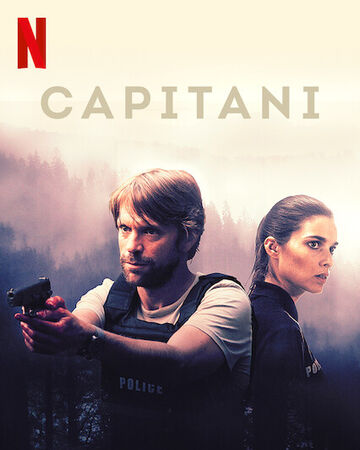
The story of ‘Capitani’ is set in a Luxembourg village. So, it makes sense that the European drama was filmed in and around Junglinster, in the Luxembourg canton of Grevenmacher.
Junglinster Castle
Samsa Fim and RTL Télé Lëtzebuerg serve as the producers of the series along with the support of Film Fund Luxembourg. Thierry Faber was excited about its production as it is the first dramatic series that is entirely filmed in Luxembourg and the Luxembourgish language. ‘Schacko Klak’ by Paul Kieffer and Fränk Hoffmann is the first feature-length film to be made in LuxembourgThe series was hyper-local before insisting that a show filmed in an endangered language can still have mass appeal. He said in a statement, "Great stories can truly come from anywhere and I am excited that our members will soon be able to discover for the very first time a hit crime show made in Luxembourg!"







 The Fugitive Stag