An image of Lethe, and the fields Full of faint light but golden, Gray cliffs, and beneath them
A sea Harsher than granite, unstill, never ceasing; High forms with the movement of gods, Perilous aspect; And one said: ‘This is Actaeon.’ Actaeon of golden greaves! Over fair meadows, Over the cool face of that field, Unstill, ever moving Hosts of an ancient people, The silent cortège.
The morning comes, the night decays, the watchmen leave their stations; The grave is burst, the spices shed, the linen wrapped up; The bones of death, cov’ring clay, the sinews shrunk & dry’d Reviving shake, inspiring move, breathing, awakening, Spring like redeemed captives when their bonds & bars are burst. Let the slave grinding at the mill run out into the field, Let him look up into the heavens & laugh in the bright air; Let the inchained soul, shut up in darkness and in sighing, Whose face has never seen a smile in thirty weary years, Rise and look out; his chains are loose, his dungeon doors are open; And let his wife and children return from the oppressor’s scourge; They look behind at every step & believe it is a dream, Singing: “The Sun has left his blackness & has found a fresher morning, And the fair Moon rejoices in the clear & cloudless night; For Empire is no more, and now the Lion & Wolf shall cease.” ‘
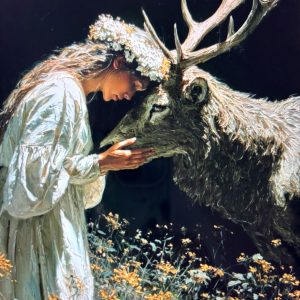
When I was a boy Often a god would save me From the shouts and blows of men; I played safely and well With the flowers of the fields And the winds of heaven Played with me.
As you make happy The hearts of plants When they extend to you Their delicate tendrils, So you make my heart happy, Father Sun, and like Endymion I was your favorite, Holy Moon!
All true and neighborly gods! If only you knew How much I loved you then!
True, at that time, I didn’t Know your names, and you Never bothered to name me, like men Who only pretend to know one another.
Yet I know you better Than I’ve ever known anyone, I understood the silence of the upper air, But I’ve never understood the words of men.
I was raised by the sounds Of the rustling grove And learned to love Among the flowers.
I grew up in the arms of the gods.
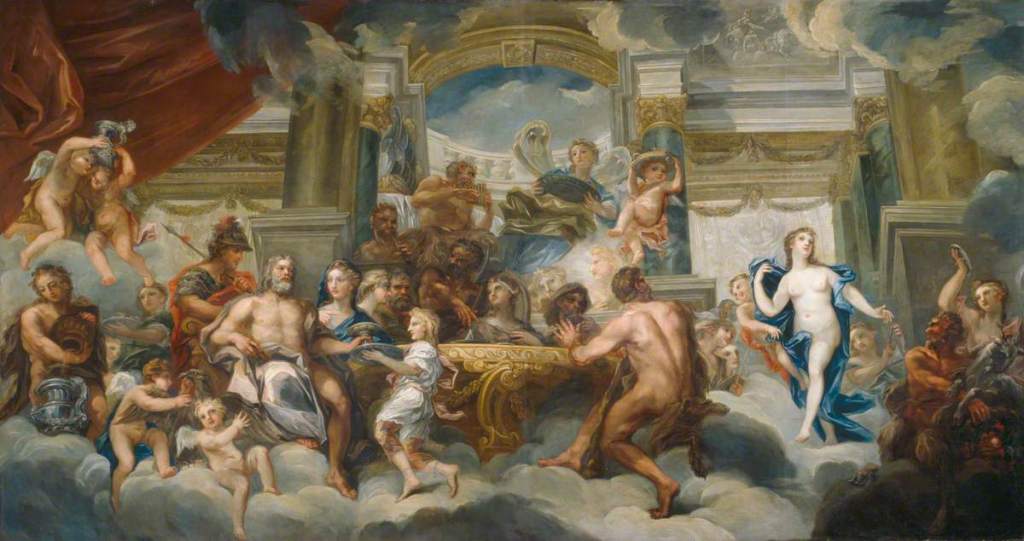
William Kent ‘Banquet of the Gods’ Royal Academy of Arts
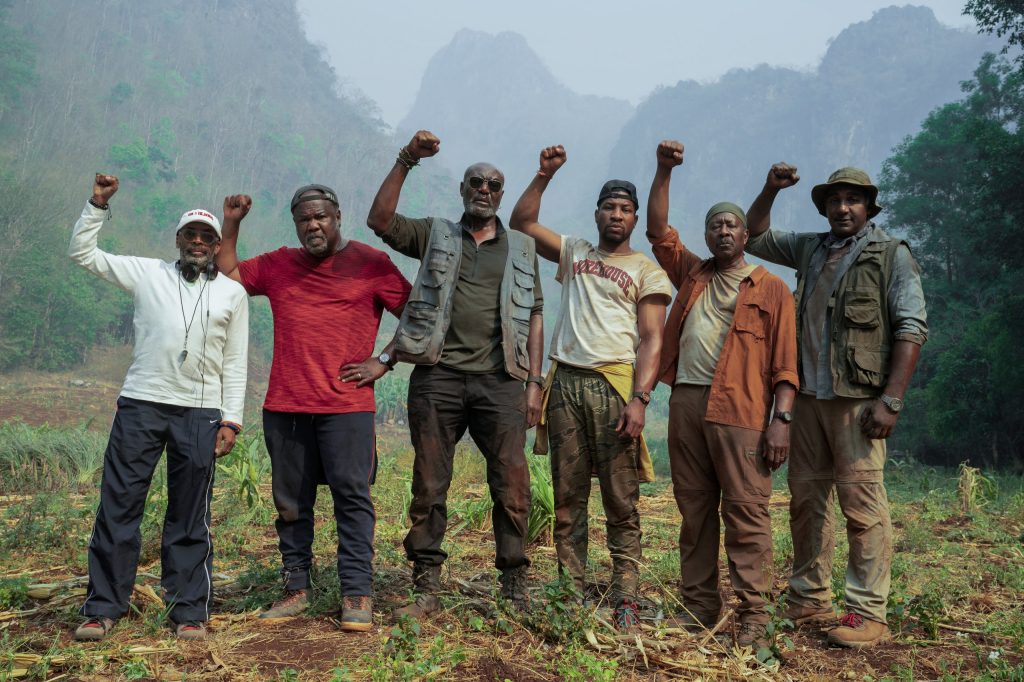
Enjoyable, on many levels. Yes, it was a weaving of certain classical films, as we had read, but it worked. OK, it is not an epic, like ‘Apocalypse Now,’ and, yes, it did have a ‘docu-film’ feel to it, at times, but maybe the theme and the age demands that. I was glued for over 2 1/2 hours: the acting superb, a relevant ending, crowned by the moving words of MLK Jr. My only criticism was the music. I would have made more of the music score, and in some scenes the music didn’t fit in with what was going on.
So, for me 4 1/2 stars … OK! **** 3/4!
As a teenager growing up in Wales in the sixties, I liked the historical reminders, since the Viet Nam war had a huge effect on my ‘growing-up.’
Muhammad Ali’s words did come flooding back: “My conscience won’t let me go shoot my brother, or some darker people, or some poor hungry people in the mud, for big powerful America … and shoot them for what? They never called me nigger. They never lynched me. They didn’t put no dogs on me. They didn’t rob me of my nationality.”
Finally, I agree with K Austin Collins – “Delroy Lindo delivers a career-high performance.”
Four Black vets returning to Vietnam when, all along, the real enemy has been back home.” Sadly, some things have not changed.
The contagio that is racism persists.
BASICALLY, I LIKE A GOOD STORY TOLD WELL. AND A STORY THAT MAKES YOU THINK. IT TICKS ALL THREE BOXES.
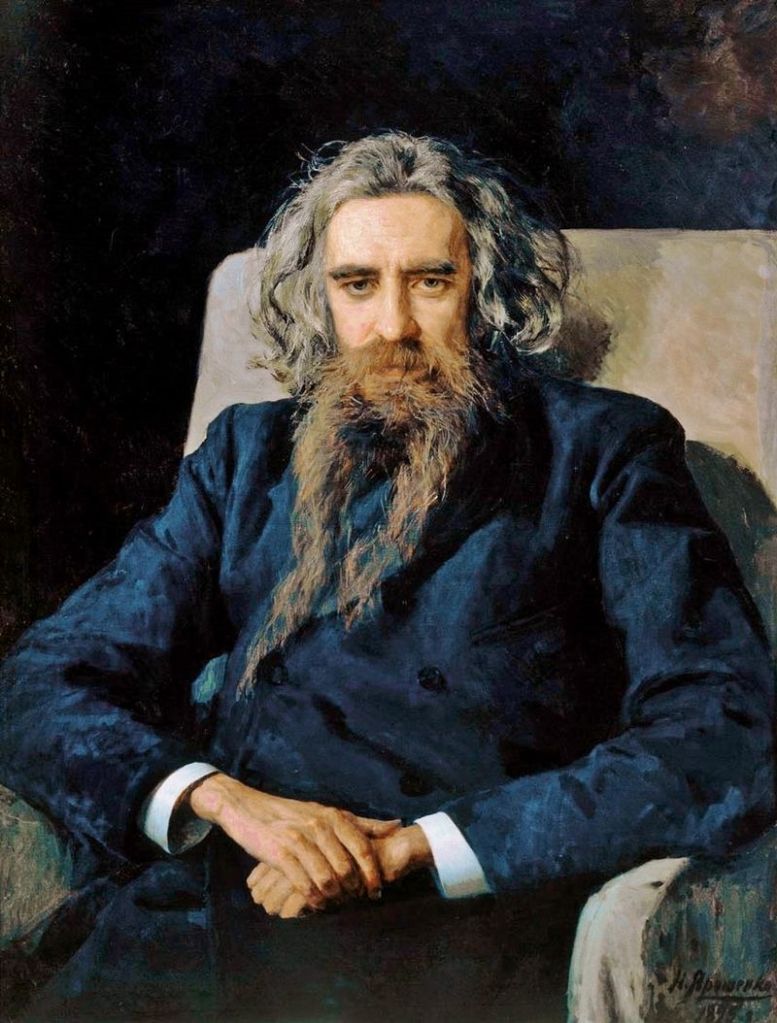
My Empress has a lofty palaceWith seven golden pillars.My Empress has a seven-pointed crown,Inlaid with countless precious stones … She casts aside her diamond crown,Abandons the golden palace, and, arriving,An unexpected guest, at her faith(full) beloved’s door,She knocks upon it, her hand full of grace.And bathed in light, she bends down over himLike youthful springtime over sombre winterAnd, full of quiet tenderness,Covers him with her radiant veil.And the dark powers are stricken to the ground,His whole being burns with pure flame,And with eternal love in her azure eyesShe softly speaks to her beloved: “I know …(Vladimir Solovyov)
A popular song composed by Hans Carste. It was originally written as “Du spielst ‘ne tolle Rolle”, with German lyrics by Hans Bradtke, and was first recorded under that title in 1962 by Willy Hagara.
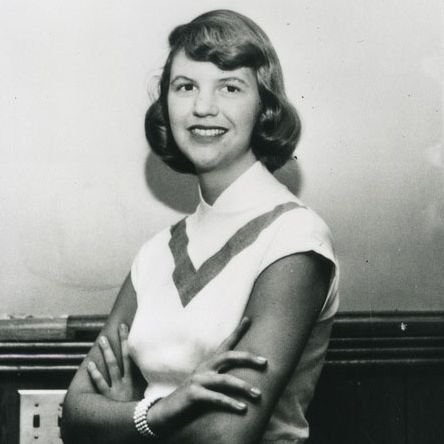
Summer 2020. 21st century Western culture. Patriarchy. God. Ancient regimes? Privilege. Neo-liberalism. Black Lives. All Lives. Globalization. Statues … etc etc … so much going on … And yes, a ‘bad patriarchy’ has a lot to answer for. Sylvia Plath’s 1960 published poem ‘Colossus’ works on so many levels. Not just her very personal – and ultimately – tragic one. It’s very much our collective tragedy if we fail to learn its lessons.
Millions are still “married to shadow.” Millions still need liberating from that ‘shadow’ – and that liberation starts from deep within each and every one of us. Read ‘Colossus. – one of the truly great English language poems of the C20th. I wish that many protestors, activists, mob-members etc would ‘read, mark, learn and inwardly digest,’ Sylvia’s message! They too could then play their part in ‘growing’ democracy in our country.
I shall never get you put together entirely, Pieced, glued, and properly jointed. Mule-bray, pig-grunt and bawdy cackles Proceed from your great lips. It’s worse than a barnyard.
Perhaps you consider yourself an oracle, Mouthpiece of the dead, or of some god or other. Thirty years now I have labored To dredge the silt from your throat. I am none the wiser.
Scaling little ladders with glue pots and pails of lysol I crawl like an ant in mourning Over the weedy acres of your brow To mend the immense skull plates and clear The bald, white tumuli of your eyes.
A blue sky out of the Oresteia Arches above us. O father, all by yourself You are pithy and historical as the Roman Forum. I open my lunch on a hill of black cypress. Your fluted bones and acanthine hair are littered
In their old anarchy to the horizon-line. It would take more than a lightning-stroke To create such a ruin. Nights, I squat in the cornucopia Of your left ear, out of the wind,
Counting the red stars and those of plum-color. The sun rises under the pillar of your tongue. My hours are married to shadow. No longer do I listen for the scrape of a keel On the blank stones of the landing.
Plenty food for thought … !He goes on … “But rather to love it.”
One is reminded of a similarly late glorification of necessity in Beethoven’s final work – the Quartet in F Major, opus 135, where the bleak fateful question “Must it be?” changes into the fanatical cry of triumph “It must be! It must be!”
Beethoven does not challenge man’s submission to the natural order; he finds his place in it, and often in such deep wells of serenity, of happiness in his own struggle, that the song that rises from him almost at the very end, in his last quartet, is for a dance. Hence, “Must it be?” he wrote on the manuscript. “It must be. It must be.”
Beethoven String Quartet No 16 Op 135 in F major Es muß sein! Alban Berg Quartet. My favourite part is the third section, Lento assai, cantante e tranquillo – the tranquil bit! Hedd perffaith hedd.
Ludwig van Beethoven1770 – 1827
But the idea that ‘something must be’ is the most hateful idea to the very essence of the incomparable William Blake. (Both he and Beethoven died in 1827).
The majority of protesters deplore violence and vandalism – some even went to the length of putting themselves in harm’s way to stop a minority of marchers attacking the police.
Yet the unrepresentative extremes of the movement are being amplified by a media that cannot help but feed the beast, and emboldened by a sense of general lawlessness. If things carry on this way the country will reach a breaking point and it will not be pretty …
writes Tom Harwood, who continues …
Black people are tired of being stopped by police for what seems to be little more than suspicion of the crime of ‘walking while black’. Though stop and search is a vital tool in the fight against knife crime, less than a quarter of police stops of black people have been over the suspected possession of offensive weapons. 56% on the other hand, are over suspicion of drug offences. There is no evidence to suggest black people use drugs more than white people, yet black people are overwhelmingly more likely to go to prison for drug use. As of 2019, just 1.2% of police officers were black, compared to 3.3% of the general population.
Yet despite these evident problems, this week we chose to enter the mad house.
In order for things to change, as they must, level heads need to prevail. Structural discrimination must be stamped out, and in order for that to happen THIS UNBEARABLE US-STYLE CULTURE WAR MUST BE KICKED BACK ACROSS THE ATLANTIC.





 The Fugitive Stag