
“Be nice to people. You never know what’s going on”

The presenter, 40, previously spoke of her struggles with mental health, writing online.

Caroline Flack’s death is a travesty, and more complicated than many would like to admit

She was a woman who had worked hard at an impressive career and who never really got the recognition she deserved

Flack wasn’t a person barely out of their teens who was thrust into the spotlight without due preparation and left to fend for themselves. She was a woman who had worked hard at an impressive career and who never really got the recognition she deserved. Her death is an undeniable travesty, and more complicated than the media would like to admit. But her life was one wrongly defined by the tabloids and the trolls. How sad, how unjust, how infuriating that her life and work are only being appreciated now that she has gone.

Caroline Flack’s death is a travesty, and more complicated than many would like to admit https://www.telegraph.co.uk/tv/2020/02/15/caroline-flacks-death-travesty-complicated-many-would-like-admit/

“The death of Love Island presenter Caroline Flack should be a salutary lesson for our treatment of celebrities” Writes Michael Hogan

FREE SPEECH

” HE NEVERTHELESS NEEDED TO ‘CHECK’ MILLER’S THINKING”.

https://www.thetimes.co.uk/article/dont-behave-like-gestapo-over-transphobic-tweets-warns-judge-zc9fpw3k8

Harry Miller, a former police officer, argued that the “non-crime hate incident” on his police record was a violation of his human rights

We need more Harry Millers https://www.spiked-online.com/2020/02/14/we-need-more-harry-millers/#.XkfRjRaKXyY.twitter

Honey Soil

The Precious Tincture

I have to hide my precious honey. There is no suggestion, at the moment, that the priceless nectar is under threat.  I am to bury it in a section of our garden at Oak Tree House. But not in a container. I am to pour it directly into the soil. It will be totally safe there. Absolutely so. No one would ever imagine that such a treasure would be hiding in such a place! At the chosen time the honey can be extracted or ‘retreated’ out of the soil.

This is true alchemy. A treasure hiding in the dark earth.

But this soil is not filthy or dirty in the conventional sense. It is a celebration of the  wonder of earthiness. The beautiful and natural stuff of fertility and life.

Two very different types of beauty and nourishment: one a symbol of the elixir of the goddesses and gods, the other the most humble of all of creation’s goodness.

Honey and soil coming together. Electrifying. A mutual fertilization, with each bringing something to the other that is unique.

A process totally hidden from the world.

Incognito.

An absolute secret. 

I don’t remember how it happened, but suddenly I am knee deep in the rich beautiful soil.  ‘Beau Solum,’ just as if I was knee deep in the sea, the water of my beloved ‘Beau-Maris.’

I notice an empty green bottle of Mateus Rose, the oldest known type of red wine. It is shining like a beautiful emerald gem deep within the soil. I pick it up and notice that deep flexible dark roots have grown from the bottom, long and sinewy like big worms.

I love worms.

Then the dynamics are reversed, and the roots emerge from the neck or lip of the bottle. As the green bottle absorbs me, I see the words of the Emerald Tablet, ‘As above, so Below.’ It was charged and highly erotic.

And so I have in my possession, an emerald coloured jar or bottle of honey-like nectar, mixed-in with the most pure and fertile soil imaginable.

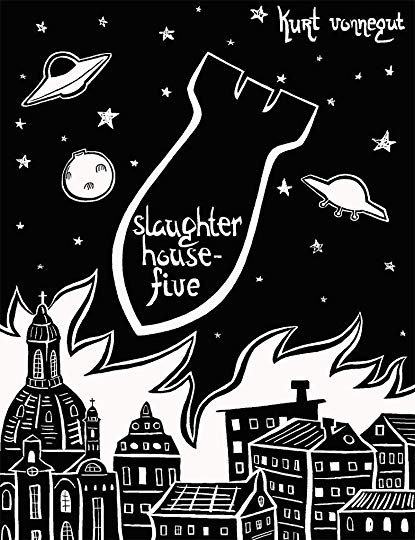
Slaughterhouse 5 – 14.02.45

Slaughterhouse 5 Trailer https://youtu.be/jRkkSVC8SKA via @YouTube

Baroque Dresden 1900
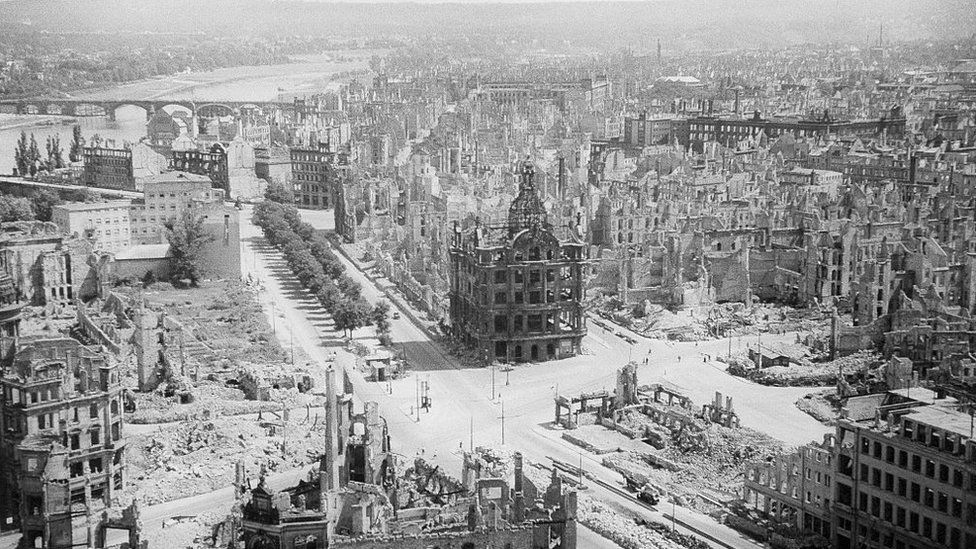
Post firestorm Dresden 1945
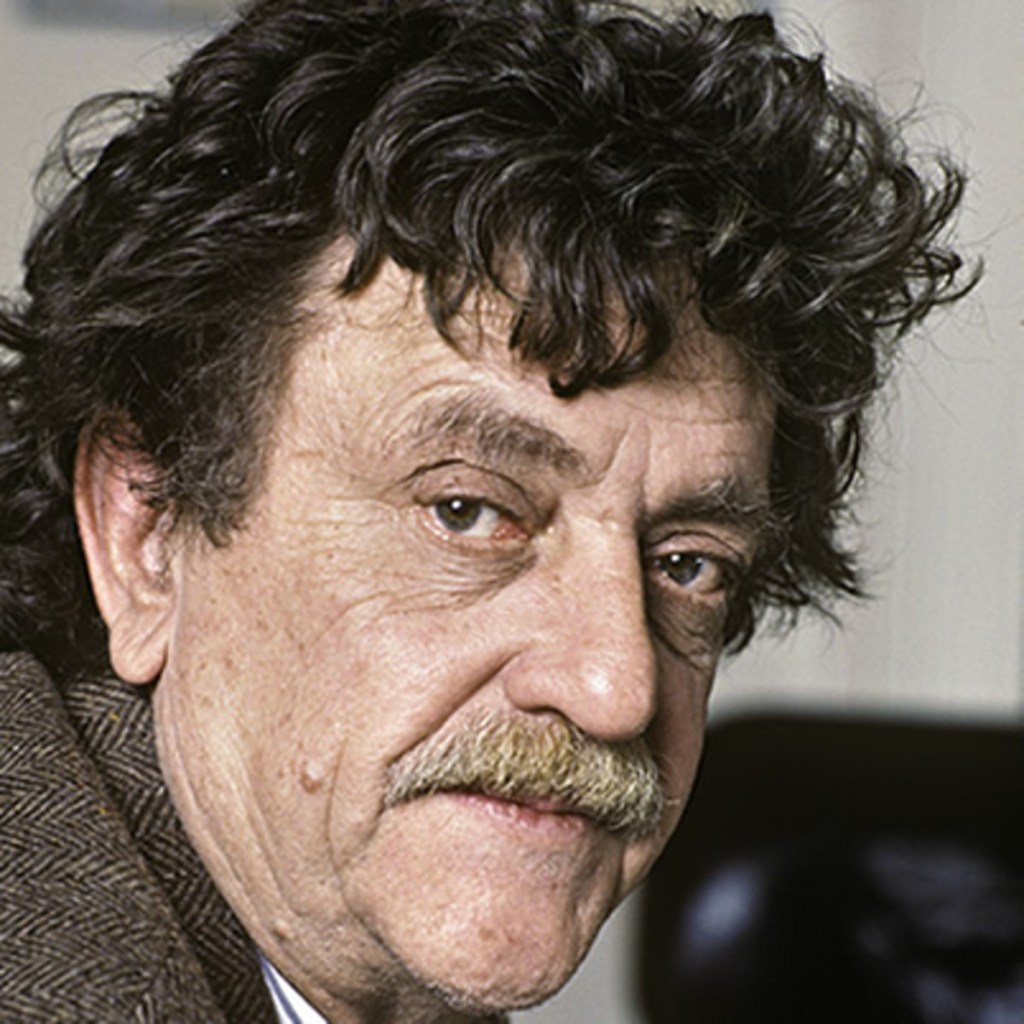
Kurt Vonnegut 1922 – 2007

On 22 December, Vonnegut, aged 22, was captured with about 50 other American soldiers. He was taken to a prison camp south of Dresden . During the journey, the Royal Air Force bombed the prisoner trains and killed about 150 men. Dresden was the “first fancy city [he had] ever seen”. He lived in a slaughterhouse when he got to the city, and worked in a factory that made malt syrup for pregnant women. Vonnegut recalled the sirens going off whenever another city was bombed. The Germans did not expect Dresden to get bombed, Vonnegut said. “There were very few air-raid shelters in town and no war industries, just cigarette factories, hospitals, clarinet factories.” More than 90% of the city’s center was destroyed after a fierce firebombing of the city.

He survived by taking refuge in a meat locker three stories underground. “It was cool there, with cadavers hanging all around”, Vonnegut said. “When we came up the city was gone … They burnt the whole damn town down.”

He was awarded a Purple Heart, about which he remarked “I myself was awarded my country’s second-lowest decoration, a Purple Heart for frost-bite.”

14 February 1945 Dresden …

Piles of corpses in front of destroyed buildings in Dresden after air raids

The Saxon city’s population, similar to that of say Liverpool, was teeming with refugees fleeing the Red Army. It is reasonable to assume that Dresden was host to 1,500,000 doomed souls when the first of the RAF and USAAF carpet bombing raids commenced on St Valentine’s Night 1945. By the morning of February 14, some 800 RAF bombers had dropped over 2,500 tons of high-explosive and incendiary bombs.

5,300 TONS OF BOMBS WERE EVENTUALLY DROPPED!

Official reports from the Dresden police, states that circa 200,000 died, mostly women and children. Only 30% of these could be identified. Allied official figures put the dead at only 25,000 to 30,000/35,000.

While the British did not tout their targeting of civilian infrastructure, some acknowledged it. “For a long time, the government, for excellent reasons, has preferred the world to think that we still held some scruples and attacked only what the humanitarians are pleased to call military targets,” the head of Britain’s bomber command said in November 1941. “I can assure you, gentlemen, that we tolerate no scruples.”

“As the incendiaries fell, the phosphorus clung to the bodies of those below, turning them into human torches. The screaming of those who were being burned alive was added to the cries of those not yet hit. There was no need for flares to lead the second wave of bombers to their target, as the whole city had become a gigantic torch,” Victor Gregg, a British paratrooper held in the city during the bombing, said 68 years later. “Dresden had no defenses, no anti-aircraft guns, no searchlights, nothing.”

“I really did go back to Dresden with Guggenheim money (God love it) in 1967. It looked a lot like Dayton, Ohio, more open spaces than Dayton has,” Kurt Vonnegut, a prisoner of war in the city, wrote in his novel “Slaughterhouse-Five,” which depicted the bombing. “There must be tons of human bone meal in the ground.”

A front cover

“It is Melitta!”

Melitta

Dressed all in black, we attend a close-knit family gathering. 

In the middle of the gathering Anima opens her mouth and captures, and then swallows, a Bumble Bee that flies into the midst of us. ‘She’ is alive and kicking inside her mouth and I am initially horrified. Then I realize that it is perfectly normal for her to swallow a living bumble bee. Maybe the bee knew its destination all along?

A few weeks later, Anima and I are walking along a busy ‘shopping-market’ kind of street.  We pass a tightly-knit group of red headed women, of all ages. From teenagers to mature woman, they have ‘startling’ flame-red or ginger hair.

Anima stops suddenly and goes back to one of the young women. I am as taken aback as the teenager, and indeed the whole group.

They all stand still, each one looking in different directions, as in a classical Rembrandt painting. Anima touches the right-hand side of the young woman’s face, just below the cheek-bone, and says, with a profound sense of re-cognition, “It’s Melitta. I recognize the skin graft from when she was burnt as a child”.

The group stands still and silent.

Anima reiterates her discovery by touching her cheek once again, “It is Melitta!”

They don’t appear to be disputing the fact, but are speechless on discovering that not only was Melitta spotted but also that she was recognized by someone who knew her from an early ‘marking’ and had personally taken care of her.

The whole episode was so dramatic, ‘colourful’ and, dare I use the word, ‘unique’, and maybe even, if I may be so bold, epoch making?

Andrei Tarkovsky

Tarkovsky 1932 – 86

Tarkovsky was a Russian filmmaker, writer, and film theorist. He is widely considered one of the greatest directors in the history of cinema, and one of Russia’s most influential filmmakers.

There’s nothing more earthy, more carnal than the work of this reputed mystical filmmaker — maybe because Russian mysticism is not that of Catholics terrified by nature and body …

In over two and a half decades, Tarkovsky made only seven feature films — a canon half the size of the sparse oeuvre of Robert Bresson, a director with whom the Russian shared many affinities. Both explored themes of spiritual anguish, the search for grace and oblivion, and the conflict between the spiritual and the material, between faith and the barbarity of the world; both made the mystical or ineffable inhere in the materiality of objects, colours, textures.

Champion of the Great Work … another ‘little boy’ …

A seven-year old little boy, who, while a little bit apprehensive at first, runs towards me. I pick him up, resting him on my right side. He is Occidental but with a hint of Oriental in his face.

He informs me that his name is Jason.

‘Something-about-him’ reminds me of those little Oriental boys whom people believe to be a reincarnation of a previous Lama.

Though we have never met before, there is a mature and ‘knowing’ connection between us. He turns out to be Jason of the Golden Hind, and I am informed that he is the ‘Champion of the Great Work’, the alchemical opus.

I then look and see an old Mariner’s chest in pristine condition, with bits of metal and a lamp with a copper base. It is oval, the shape of an egg, or like an acorn in a copper shell.

It is always kept wrapped-up until it is needed.

It is now being fitted onto my new boat, the ‘Golden Hind,’ as it continues on its journey, guided by little Jason!

Courbet’s little studio boy …

Suddenly, the little studio boy, lost in admiration with Courbet’s creation, becomes the focal point for me. Momentarily, the myriad of characters become insignificant. I wonder what his name was? What did he grow up to be? I wish he could turn round and look at me.

I am reminded of the moment when I was looking through the window of the back porch of our Georgian home in Beaumaris. I was three years old. In fact, I also remember that I was, simultaneously, observing myself doing ‘the looking’ – through the window with a vista down to the bottom of the garden. But I was also looking up at the sky.

Today, that little boy is also looking up at a huge canvas of European culture since 1855 … over a century and a half. He is no longer blind to the illusions of adulthood, having witnessed the truth of living in our world. And yet he is still able – in some mysterious way – to hang on to and taste the innocence of childhood.

I had a dream a year or so ago that took me back to that moment when all that existed was the green grass and the blue sky. I am ‘of the earth’ and when I look up into the heavens, it too is ‘of the earth’. Gazing into infinity means looking into the depth of the mystery of the earth, and not some abstract and idealised beyond.

It’s the same as when I look into the eyes of the people I am truly able to make contact … and connect with.

(More musings from the ‘little studio boy’ to follow …)

Meanwhile, I still have the green grass and the blue sky … as Rilke keeps on reminding me …

Through the empty branches the sky remains.
It is what you have.
Be earth now, and evensong.
Be the ground lying under that sky.
Be modest now, like a thing
ripened until it is real,
so that (she) who began it all
can feel you when (she) reaches for you.